What Size Particles Do HEPA Filters Catch?
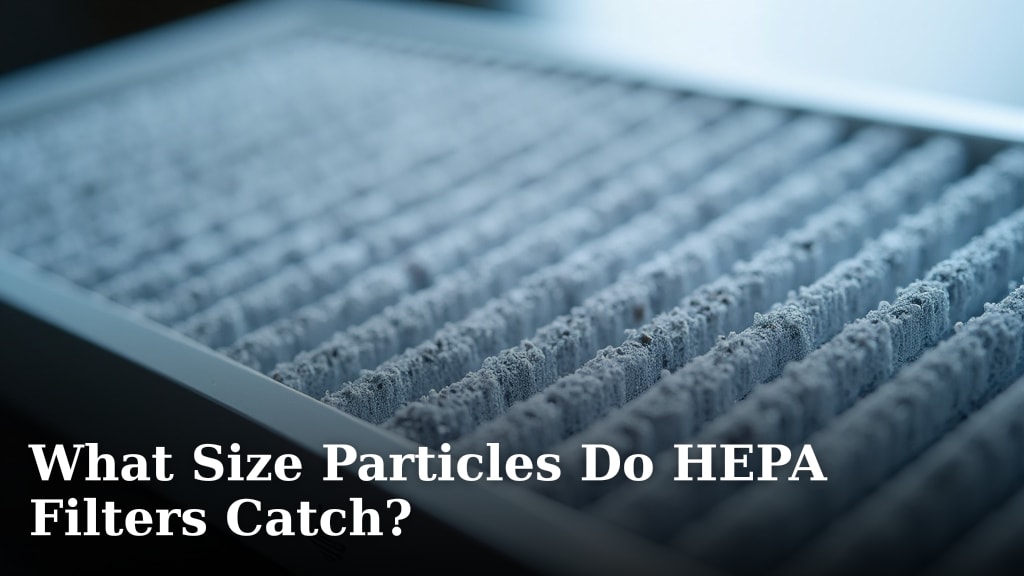
HEPA filters are designed to catch particles as small as To understand HEPA filters, it can be helpful to see how an air purifier vs air cleaner works.0.3 microns. This means they can capture a vast majority of airborne contaminants, including dust, pollen, mold spores, and even some bacteria. They are highly effective at trapping very tiny particles that can affect your air quality.
What does 0.3 microns even mean? It’s incredibly small! Think of a human hair; it’s about 50 to 100 microns wide. HEPA filters are built to trap particles many times smaller than that. This makes them a top choice for improving indoor air. Many experts agree on their effectiveness.
- HEPA filters catch particles down to 0.3 microns.
- This size is incredibly small, much smaller than a human hair.
- They capture common allergens like dust and pollen.
- HEPA filters also trap mold spores and some bacteria.
- This level of filtration significantly improves indoor air quality.
So, if you’re wondering exactly what size particles these filters can handle, let’s break it down further. We’ll look at why this specific size matters for your health and home.
Understanding HEPA Filter Particle Capture
HEPA filters are designed to catch particles down to Understanding the difference between an air purifier vs humidifier can help you choose the right device.0.3 microns in size. This is a very specific measurement. It means these filters are incredibly effective at trapping even the tiniest specks of dust or other airborne irritants. Think of it as a super-fine net for your air.
When we talk about HEPA filters, it’s important to understand what that 0.3-micron rating truly means for your air quality. Let’s break down the science and practical implications.
What Exactly is a Micron?
A micron is a unit of measurement. It’s also called a micrometer. One micron is one-millionth of a meter. To put that into perspective, a single human hair is about 50 to 100 microns wide. So, a 0.3-micron particle is roughly 100 to 300 times smaller than the width of a human hair.
It’s hard for us to even visualize particles that small. They are microscopic. You can’t see them with the naked eye. They float around in the air and can easily get into your lungs if you breathe them in.
How HEPA Filters Work: The Science Behind the Size
HEPA stands for High-Efficiency Particulate Air. The standard for a true HEPA filter is strict. It must remove at least 99.97% of airborne particles 0.3 microns in diameter. This is a very specific size, and it’s chosen for a reason.
Why 0.3 microns? Research has found this size is often the most difficult to capture. Smaller particles can sometimes be trapped more easily by other mechanisms. Larger particles are also easier to catch. The 0.3-micron size represents a sort of “worst-case scenario” for filter efficiency. By meeting this standard, HEPA filters prove their ability to handle a wide range of particle sizes.
The Three Mechanisms of HEPA Filtration
HEPA filters don’t just rely on one method to catch particles. They use three main processes:
- Interception: Particles following the airflow can come very close to the filter fibers. If they are within a certain distance, they can stick to the fiber.
- Impaction: Larger, heavier particles can’t easily follow the airflow as it bends around the filter fibers. They keep going straight and hit the fibers directly.
- Diffusion: Very small particles (much smaller than 0.3 microns) move randomly. This erratic movement makes them more likely to bump into and stick to the filter fibers.
So, while 0.3 microns is the benchmark, HEPA filters are excellent at capturing particles both larger and smaller than this critical size. This means they are very good at cleaning your air.
What Specific Particles Do HEPA Filters Catch?
Because of their high efficiency, HEPA filters can trap a wide variety of common airborne contaminants. You might be surprised by how many things they can remove from your indoor air.
Common Allergens and Irritants
These filters are fantastic for allergy sufferers. They remove many of the things that trigger sneezing and itchy eyes.
- Dust Mites and Their Debris: These microscopic creatures live in our homes. Their waste products are tiny and can cause allergic reactions. HEPA filters catch these particles.
- Pollen: Whether it comes in from outside or you track it in, pollen is a major allergen. HEPA filters trap pollen grains effectively.
- Pet Dander: Tiny flakes of skin shed by pets are a common allergen. HEPA filters can capture this dander.
- Mold Spores: Mold can grow in damp areas. Its spores become airborne and can affect your health. HEPA filters are great at trapping these.
Bacteria and Viruses
While bacteria are generally larger than 0.3 microns, some can be smaller. Viruses are significantly smaller. HEPA filters are tested and certified to capture 99.97% of particles at 0.3 microns. This means they can also capture many larger bacteria and even some smaller viruses and bacteria.
It’s important to note that HEPA filters don’t kill or inactivate these microorganisms. They simply trap them on the filter media. However, removing them from the air you breathe is a major health benefit.
Other Fine Particles
Beyond allergens, HEPA filters clean up other types of small airborne pollutants:
- Smoke Particles: Whether from cooking or wildfires, smoke contains very small particles. HEPA filters can capture a large portion of these.
- Soot: Tiny particles of carbon can enter your home.
- Dust: Everyday household dust is made up of many different things, and HEPA filters catch it all.
Why the 0.3 Micron Standard is Key
You might wonder why experts focus on 0.3 microns if filters catch smaller and larger particles too. This specific size is often referred to as the Most Penetrating Particle Size (MPPS). Many studies have shown that particles around this size are the hardest for filters to trap.
This is because larger particles are caught by inertia and gravity more easily. Tiny particles move erratically and are more likely to be captured by diffusion. Particles in the middle range, around 0.3 microns, can navigate the filter fibers without being caught by either mechanism as easily.
Therefore, a filter that can reliably capture 99.97% of 0.3-micron particles is proven to be highly effective against a broad spectrum of airborne contaminants. It’s a benchmark for true air purification.
Comparing HEPA to Other Filter Types
It can be helpful to see how HEPA filters stack up against other common air filters you might encounter. This helps you understand why the HEPA standard is so well-regarded.
| Filter Type | Particle Size Captured (Approximate) | Efficiency at 0.3 Microns |
|---|---|---|
| True HEPA | 0.3 microns and larger (also smaller via diffusion) | ≥ 99.97% |
| HEPA-type/HEPA-like | Larger particles (e.g., 2 microns and up) | Varies, often 85-95% (but not certified to HEPA standard) |
| Electrostatic Filters | Can capture smaller particles, but efficiency can decrease over time as they get dirty. May produce ozone. | Varies, can be high when clean. |
| Basic Fiberglass Filters (furnace filters) | Larger particles only (e.g., 10 microns and up) | Very low, often < 10% |
As you can see, “HEPA-type” filters are not the same as true HEPA filters. Always look for the official HEPA certification to ensure you’re getting the highest level of filtration. This makes a big difference for your health and home environment.
When HEPA Filters Make the Biggest Difference
If you’re considering an air purifier or a filter for your home, here’s a quick checklist to see if HEPA is your best bet:
- You or someone in your household suffers from allergies or asthma.
- You have pets that shed dander.
- You live in an area with poor outdoor air quality (e.g., near highways, industrial areas, or wildfire smoke).
- You are concerned about lingering odors or smoke.
- You want to reduce the number of airborne germs in your home.
- You simply want the cleanest possible indoor air.
Choosing a true HEPA filter means you are investing in a high standard of air purification. It’s designed to tackle the smallest particles that can impact your well-being.
Conclusion
You now understand that true HEPA filters are certified to capture at least 99.97% of particles at 0.3 microns. This specific size is the most difficult for filters to trap, making HEPA filters incredibly effective for your indoor air. By capturing this “worst-case” particle size, they also catch a vast majority of both larger and smaller airborne contaminants. If you’re seeking cleaner air for allergy relief or overall well-being, investing in a certified HEPA filter is a smart choice for your home.
Frequently Asked Questions
Can HEPA filters catch everything smaller than 0.3 microns?
Yes, HEPA filters are very effective at capturing particles both larger and smaller than 0.3 microns. While 0.3 microns is the benchmark for testing, the filtration mechanisms also catch much smaller particles through diffusion and larger particles through impaction and interception.
Are “HEPA-type” or “HEPA-like” filters as good as true HEPA filters?
No, “HEPA-type” or “HEPA-like” filters are not the same as true HEPA filters. They may capture a good amount of particles, but they are not certified to meet the strict 99.97% efficiency at 0.3 microns that true HEPA filters do.
Do HEPA filters kill bacteria and viruses?
HEPA filters do not kill or inactivate bacteria or viruses. They work by physically trapping these particles in the filter media, removing them from the air you breathe. The act of removing them from your air is what provides the health benefit.
What’s the difference between a 0.3-micron particle and a virus?
A 0.3-micron particle is a standard measurement used to test HEPA filter efficiency. Viruses are generally much smaller than 0.3 microns. While HEPA filters are tested at 0.3 microns, their mechanisms are also effective at capturing many of these smaller viral particles.
How often should I replace my HEPA filter?
Replacement frequency varies by manufacturer and usage, but most HEPA filters need to be replaced every 6 to 12 months. Check your air purifier’s manual for specific recommendations to ensure optimal performance and air quality.