What Is PM10? Coarse Dust Particles Explained
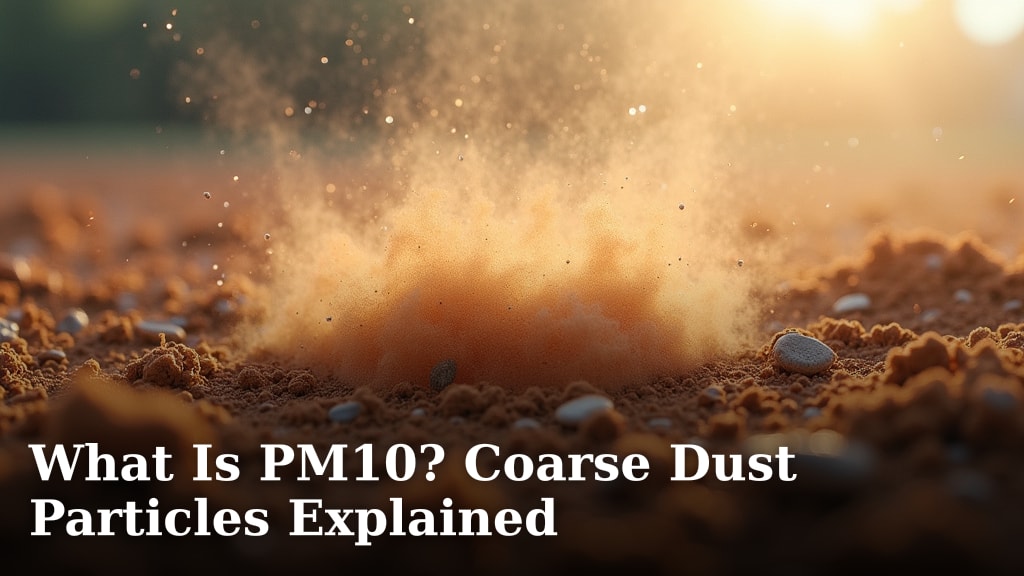
PM10 refers to particulate matter that is 10 micrometers or smaller. Think of it as the coarse dust you can see floating in the air. These tiny particles come from things like dust, dirt, soot, and smoke. When PM10 levels are high, it can affect the air quality around you. We’ve researched this topic to help you understand it better.
Understanding PM10 is important because these particles can easily be inhaled. They are larger than PM2.5, but still small enough to cause concern. Sources can range from construction sites to natural events like dust storms. Knowing about PM10 helps you be aware of your surroundings and the air you breathe every day. Many health organizations monitor these levels.
TL;DR:
- PM10 is coarse dust particles.
- They are 10 micrometers or smaller.
- Sources include dust, dirt, and smoke.
- High levels affect air quality.
- They can be inhaled.
Let’s walk through exactly what PM10 means and how it might affect you.
Understanding PM10: The Larger Dust Particles in Your Air
So, what exactly are these PM10 particles we’re talking about? Think of them as the coarser bits of dust and dirt that float around in the air. They are classified by their size, specifically being 10 micrometers (µm) or smaller. To give you some perspective, a human hair is about 50 to 70 micrometers wide. That means PM10 particles are much smaller than a hair, but still larger than some of the even tinier particles you might hear about.
These larger particles can easily become airborne. You might see them as visible dust motes dancing in a sunbeam. They originate from a variety of sources, both natural and human-made. Understanding where they come from is the first step to managing them. We’ve looked into the common origins to give you a clear picture.
Where Do PM10 Particles Come From?
The sources of PM10 are quite diverse. They can arise from everyday activities, industrial processes, and even natural events. Let’s break down the most common culprits you might encounter.
Natural Sources of PM10
Nature itself contributes to PM10 levels. For instance, when the wind blows through dry areas, it can kick up a lot of dust and soil. These particles are naturally present in the environment. Other natural events like wildfires can release ash and smoke, which also contain PM10 particles.
Geological activity plays a role too. Volcanic eruptions, while infrequent in many places, can spew fine ash into the atmosphere. Even the pollen from plants, though organic, can sometimes fall into the PM10 size range and contribute to air quality concerns.
Human-Made Sources of PM10
A significant portion of PM10 in the air comes from human activities. Construction sites are a major source. Think about all the concrete, dirt, and building materials being moved around – these create a lot of dust. Demolition sites also contribute heavily.
Road dust is another big one. As vehicles drive over pavement, they grind up tire particles, brake dust, and road surface material. This gets stirred up into the air. Industrial processes, like manufacturing and power generation, can also release PM10 through smokestacks, often as soot or fly ash.
Agriculture is another area. Plowing fields, harvesting crops, and moving livestock can all stir up dust. Even activities like residential wood burning in fireplaces or stoves can release fine particles into the air during colder months.
How Does PM10 Affect Your Health?
When PM10 particles are present in the air, they can pose health risks. Because they are small enough, they can be inhaled. The path they take once inside your body is key to understanding the potential effects. Many health organizations monitor these levels closely for public safety.
Inhalation and Respiratory System
When you breathe in air containing PM10, these particles can enter your respiratory system. Due to their size, they tend to be deposited in the upper airways of your lungs, like your nose, throat, and the larger bronchial tubes. They are generally not thought to penetrate as deeply into the lungs as the smaller PM2.5 particles.
However, even these coarser particles can cause irritation. For individuals with existing respiratory conditions, such as asthma or bronchitis, inhaling PM10 can trigger or worsen symptoms. You might experience coughing, wheezing, or shortness of breath. The Environmental Protection Agency (EPA) and similar bodies often set guidelines for safe PM10 levels based on these health impacts.
Potential Health Concerns
We found that exposure to high levels of PM10 can be linked to several health issues. These often include exacerbation of existing lung diseases. It can also affect people with heart conditions, though the link is generally stronger for finer particles.
Some research suggests that prolonged exposure to PM10 might contribute to respiratory infections. For children and the elderly, who may have more sensitive respiratory systems, the effects can sometimes be more pronounced. It’s about the cumulative effect of breathing polluted air over time.
PM10 vs. PM2.5: What’s the Difference?
You’ve likely heard about both PM10 and PM2.5. They are both types of particulate matter, but their size is the critical distinction. Understanding this difference helps you grasp why certain particles are more concerning than others.
PM10, as we’ve discussed, includes particles 10 micrometers or smaller. These are the coarser dust particles. PM2.5 refers to particles that are 2.5 micrometers or smaller. Think of PM2.5 as the finer dust, often coming from combustion sources like vehicle exhaust, industrial emissions, and burning wood. Because PM2.5 particles are so much smaller, they can penetrate deeper into your lungs, reaching the tiny air sacs (alveoli). This deeper penetration is why PM2.5 is often a greater focus in air quality discussions regarding serious health risks.
Here’s a simple way to visualize it:
| Particle Type | Size Range | Primary Sources | Where They Deposit in Lungs |
|---|---|---|---|
| PM10 | 10 micrometers or smaller | Dust, dirt, pollen, mold spores, smoke | Upper airways (nose, throat, bronchial tubes) |
| PM2.5 | 2.5 micrometers or smaller | Combustion (vehicles, power plants), fires | Deep into lungs (air sacs/alveoli) |
As you can see, PM10 is the larger category. All PM2.5 particles are also technically PM10, but PM10 also includes particles between 2.5 and 10 micrometers. So, while PM10 is important, PM2.5 often garners more attention due to its ability to reach deeper into the respiratory system.
How Is PM10 Measured and Monitored?
Air quality agencies around the world measure PM10 levels to inform the public. These measurements help determine if the air is safe to breathe. Special equipment is used to collect air samples over a period of time.
Air Quality Monitoring Stations
Government agencies and research institutions operate networks of air quality monitoring stations. These stations are strategically placed in urban, rural, and industrial areas. They use sophisticated samplers that draw in a known volume of air. These samplers then collect particles onto a filter. The filter is weighed before and after sampling to determine the mass of particles collected. This mass, combined with the volume of air sampled, gives the concentration of PM10 (often in micrograms per cubic meter of air, or µg/m³).
These monitoring stations provide real-time or near-real-time data. This information is often made available to the public through websites, apps, or air quality advisories. Knowing these levels can help you make decisions about your outdoor activities.
Air Quality Indices
To make the data easier for everyone to understand, air quality is often reported using an Air Quality Index (AQI). The AQI translates complex air pollution data into a simple numerical scale. Different pollutants, including PM10 and PM2.5, are assigned a value on this scale. Generally, a higher AQI number means unhealthier air.
The AQI helps categorize the air quality into different levels, such as “Good,” “Moderate,” “Unhealthy for Sensitive Groups,” “Unhealthy,” “Very Unhealthy,” and “Hazardous.” Each category comes with specific recommendations for the general public and for sensitive individuals. These indices are standardized by agencies like the EPA in the United States.
What Can You Do About PM10?
While you can’t control outdoor air quality entirely, there are steps you can take to minimize your exposure to PM10, especially if you are sensitive to air pollution. Being aware is your first line of defense.
Actions for Your Health
When PM10 levels are high, it’s a good idea to reduce your time spent outdoors, particularly during strenuous activities. If you have asthma or other respiratory conditions, follow your doctor’s advice. Having a plan in place is always wise.
Inside your home, you can help reduce indoor PM10 by controlling dust sources. Regular cleaning, using vacuum cleaners with HEPA filters, and keeping windows closed during periods of high outdoor PM10 can make a difference. Air purifiers with appropriate filters can also help remove particles from your indoor air.
Quick Tips for Reducing Exposure
- Check local air quality reports daily.
- Limit outdoor exercise when PM10 is high.
- Keep windows closed during dust storms or high pollution days.
- Use high-efficiency air filters in your HVAC system.
- Consider an air purifier for indoor spaces.
- Clean regularly to reduce settled dust.
Conclusion
We’ve learned that PM10 represents the larger, coarse dust particles in our air, measuring 10 micrometers or less. These particles come from both natural sources like windblown dust and human activities such as construction and road dust. While they don’t penetrate as deeply as PM2.5, they can still irritate your airways and worsen existing respiratory issues. You can protect yourself by checking air quality reports and reducing outdoor activity when levels are high. Taking simple steps indoors, like using air purifiers and cleaning regularly, also helps you breathe easier.
Frequently Asked Questions
What’s the main difference between PM10 and PM2.5?
The main difference is size. PM10 particles are 10 micrometers or smaller, acting like coarse dust. PM2.5 particles are much finer, 2.5 micrometers or smaller, and can penetrate deeper into your lungs. Because PM2.5 reaches deeper, it’s often considered a greater health concern.
Can PM10 particles be seen with the naked eye?
Sometimes you can see PM10 particles, especially when they are present in high concentrations. Think of visible dust motes dancing in a sunbeam, or a hazy appearance during a dust storm. However, many PM10 particles are too small to be seen without magnification.
Are PM10 particles harmful to everyone?
PM10 can affect everyone, but individuals with pre-existing respiratory conditions like asthma or bronchitis are often more sensitive. Children and older adults may also experience more pronounced effects. Monitoring air quality and taking precautions is wise for all.
How can I reduce PM10 indoors?
You can reduce indoor PM10 by keeping windows closed when outdoor air quality is poor. Regular cleaning, especially vacuuming with a HEPA filter, helps remove settled dust. Using an air purifier with a HEPA filter can also capture these particles from your indoor air.
Where can I find PM10 air quality information?
You can find PM10 air quality information through local government environmental agencies or air quality monitoring websites. Many regions use an Air Quality Index (AQI) that reports levels for PM10 and other pollutants, often providing recommendations for outdoor activities.