Difference Between HEPA and True HEPA Filters
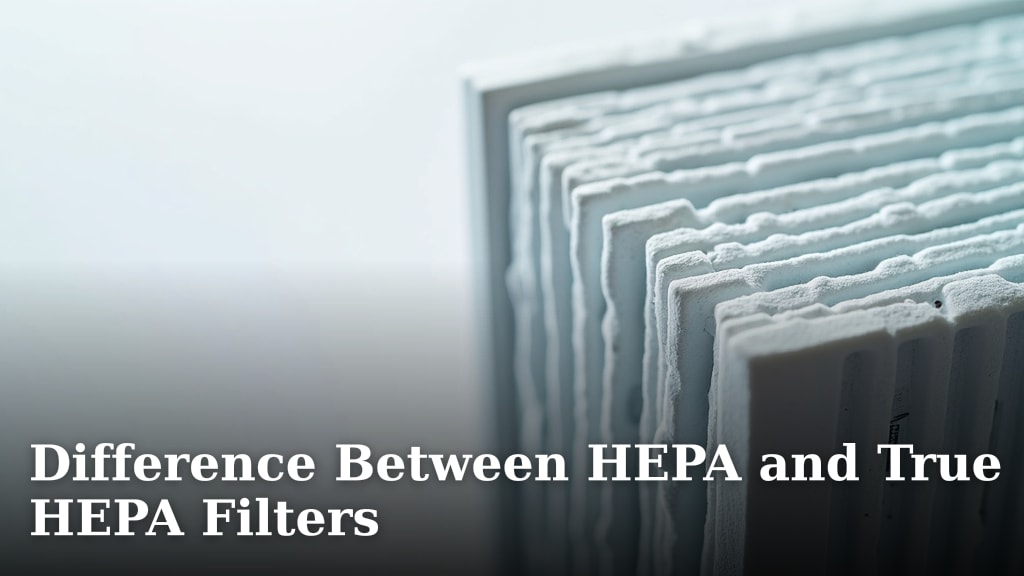
When looking at air filters, HEPA and True HEPA filters aren’t quite the same thing. A True HEPA filter is certified to capture 99.97% of particles. These particles are as small as 0.3 microns. Not all filters labeled “HEPA-type” meet this strict standard.
Understanding the difference matters for your air quality. True HEPA filters are the gold standard for removing allergens. This includes things like dust mites, pollen, and pet dander. We found that this level of filtration can make a big difference in your home.
- True HEPA meets a specific performance standard.
- It captures 99.97% of particles down to 0.3 microns.
- “HEPA-type” or “HEPA-like” filters may not be as effective.
- Choose True HEPA for the best air purification.
Let’s clear the air and break down exactly what makes a True HEPA filter the top choice for cleaner air in your home.
Understanding HEPA vs. True HEPA Air Filters
You’ve probably seen air purifiers advertised with HEPA filters. But what does that really mean for the air you breathe? It’s not as simple as just seeing the letters “HEPA.” We’ve found that understanding the specific types of HEPA filters can help you make the best choice for your home’s air quality.
What Does HEPA Actually Stand For?
HEPA stands for High-Efficiency Particulate Air. This term describes a specific type of air filter. It’s designed to trap very small particles. Many experts agree that this kind of filtration is important for reducing airborne contaminants.
The Strict Standards of a “True HEPA” Filter
When a filter is labeled “True HEPA,” it means it meets a very specific performance standard. This standard was set by the U.S. Department of Energy. To earn the “True HEPA” title, a filter must capture at least 99.97% of airborne particles. These particles can be as small as 0.3 microns in diameter.
Think about how tiny that is! To give you an idea, a human hair is about 50 to 100 microns wide. A True HEPA filter can catch particles much, much smaller than that. We found that this level of fine filtration is what makes them so effective.
Microns: A Tiny Unit of Measurement
A micron is a unit of length. One micron is equal to one-millionth of a meter. To put it in perspective, 0.3 microns is incredibly small. Many allergens, such as pollen, mold spores, and pet dander, are larger than 0.3 microns. However, even smaller particles, like bacteria and some viruses, can also be captured by True HEPA filters.
Why “HEPA-Type” or “HEPA-Like” Filters Can Be Misleading
This is where things can get a little confusing. You might see filters advertised as “HEPA-type,” “HEPA-like,” or “99% HEPA.” These terms sound similar, but they don’t guarantee the same level of performance as a True HEPA filter. We found that these filters might not have been tested to the same rigorous standards.
These filters may capture a high percentage of particles. However, they might not always reach that 99.97% mark. They also might not be tested for their ability to capture particles as small as 0.3 microns. The U.S. government actually has specific guidelines for what can be called a HEPA filter. Filters not meeting these guidelines cannot use the “True HEPA” name.
Understanding the Testing Differences
True HEPA filters are tested individually to ensure they meet the 99.97% efficiency standard at 0.3 microns. Filters labeled as “HEPA-type” or “HEPA-like” may be tested differently, or not tested at all for efficiency on the smallest particles. This means their performance can vary quite a bit. Many experts suggest sticking with True HEPA for reliable results.
How True HEPA Filters Work Their Magic
The effectiveness of a True HEPA filter comes down to its design and the materials used. They are not just simple screens. We’ve learned that the way air moves through them is key.
The Material Matters: A Special Kind of Paper
The filter media itself is usually made from very fine fiberglass or synthetic fibers. These fibers are arranged in a dense, pleated pattern. This pleating increases the surface area of the filter. A larger surface area means more opportunities to trap particles. Think of it like having a much bigger net to catch things.
Trapping Particles: More Than Just Straining
It’s a common misconception that HEPA filters simply strain particles out of the air. While some larger particles are trapped by the physical mesh, the filter also uses other mechanisms to capture the very small ones. These include:
- Interception: Larger particles in the airflow come into contact with the filter fibers and stick.
- Impaction: Even larger particles can’t follow the curves of the airflow around the fibers and directly hit the filter.
- Diffusion: The smallest particles move randomly (like molecules in Brownian motion). This random movement increases their chances of colliding with a filter fiber.
We found that this combination of methods allows True HEPA filters to effectively capture a wide range of particle sizes. This is why they are so good at cleaning the air.
Why Choose True HEPA for Your Home?
When you’re looking to improve your indoor air quality, choosing the right filter is important. We’ve seen that a True HEPA filter offers a clear advantage.
Allergy and Asthma Relief
For people who suffer from allergies or asthma, airborne particles can be a major trigger. These can include pollen, dust mites, pet dander, and mold spores. A True HEPA filter is designed to capture these irritants. Many allergy organizations recommend using air purifiers with True HEPA filters. We found that many users report significant relief from symptoms.
According to the Asthma and Allergy Foundation of America, reducing exposure to allergens can help manage symptoms. True HEPA filters can play a role in this by removing these allergens from the air you breathe.
Capturing Other Tiny Particles
Beyond allergens, True HEPA filters can also capture other microscopic particles. This includes bacteria and some viruses. While air purifiers are not a substitute for good hygiene practices, they can contribute to a healthier environment. Research in journals like the *Journal of Environmental Science and Health* has looked at the role of HEPA filtration in reducing airborne pathogens.
What About Odors and Gases?
It’s important to note what HEPA filters are *not* designed to do. True HEPA filters excel at capturing particulate matter. They are not typically designed to remove odors, gases, or volatile organic compounds (VOCs). For those issues, you often need an air purifier that also includes an activated carbon filter.
Many air purifiers combine a HEPA filter with a carbon filter. The HEPA part handles the particles, and the carbon filter absorbs the gases and odors. We found that this combination is often best for overall air freshness.
Making the Right Choice: A Quick Checklist
Choosing an air purifier with the right filter can feel overwhelming. Here’s a simple checklist to help you remember the key points:
- Look for the term “True HEPA”.
- Ensure it captures 99.97% of particles.
- Verify it can filter particles down to 0.3 microns.
- Be wary of terms like “HEPA-type” or “HEPA-like.”
- Consider if you also need an activated carbon filter for odors.
- Check if the filter is certified by a reputable standard if possible.
We found that by focusing on these simple distinctions, you can make a more informed decision for your home. Getting cleaner air is often a matter of understanding the details.
Conclusion
You’ve learned that not all HEPA filters are created equal. A True HEPA filter is your best bet for cleaner air. It’s certified to capture 99.97% of tiny particles, down to 0.3 microns. Terms like “HEPA-type” or “HEPA-like” don’t offer the same guarantee. For genuine relief from allergens and a healthier home environment, always look for the True HEPA label.
Ready to breathe easier? Make sure your next air purifier purchase clearly states it uses a True HEPA filter. Your lungs will thank you.
Frequently Asked Questions
What’s the main difference between HEPA and True HEPA?
The main difference is the standard they meet. A True HEPA filter is certified by the U.S. Department of Energy to capture 99.97% of particles at 0.3 microns. Filters labeled “HEPA-type” or “HEPA-like” may not have been tested to this same strict standard.
Can a HEPA filter remove odors and gases?
Generally, no. True HEPA filters are designed to capture particulate matter like dust, pollen, and dander. They are not typically effective at removing odors, smoke, or chemical gases. For those, you’ll need a filter that includes activated carbon.
How do I know if a filter is actually True HEPA?
Look for the explicit label “True HEPA” on the product packaging or description. Reputable brands will clearly state that their filter meets the 99.97% efficiency at 0.3 microns standard. Be cautious of vague marketing terms.
Are “HEPA-type” filters completely useless?
Not necessarily useless, but less reliable. They might capture a good amount of particles, but they don’t guarantee the same level of performance as a True HEPA filter. If you have allergies or asthma, sticking with True HEPA is recommended for optimal results.
Are True HEPA filters good for pets?
Yes, True HEPA filters are excellent for pet owners. They are highly effective at capturing pet dander, which is a common allergen. They also trap dust and other airborne particles that pets can stir up, contributing to a fresher home environment.