Carbon Filter vs HEPA Filter: What Each One Does
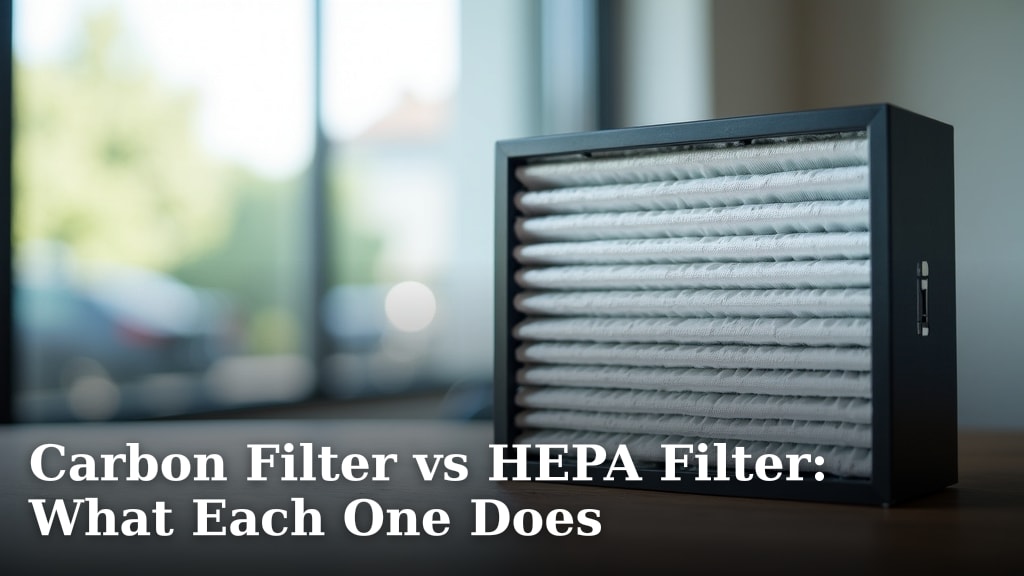
When choosing an air purifier filter, understanding the difference between a carbon filter and a HEPA filter is key. A HEPA filter is designed to capture tiny physical particles, while a carbon filter targets gases and odors. Both play a vital role in cleaning your air, but they do different jobs.
Think of it like this: HEPA filters are like a super-fine sieve for your air. They trap things you can see and some you can’t, like dust and pollen. Carbon filters are more like a sponge for smells. They absorb chemicals and odors that HEPA filters can’t catch. Many people find a combination of both offers the best air quality. We found that this combination tackles a wider range of air pollutants.
- HEPA filters trap physical particles like dust, pollen, and pet dander.
- Carbon filters absorb odors, smoke, and chemical fumes.
- Neither filter type is a “better” choice; they serve different purposes.
- Many air purifiers use both types for maximum air cleaning.
Below, we’ll break down exactly what each of these popular air filter types does so you can decide what’s best for your home.
Understanding Your Air Purifier’s Cleaning Power: Carbon vs. HEPA
When you’re looking to clear the air in your home, two filter types often come up: HEPA and carbon. They sound similar, but they tackle different kinds of air pollution. You might be wondering which one you need, or if you need both. Let’s break down exactly what each filter is designed to do so you can make the best choice for your space.
How HEPA Filters Work: Capturing Tiny Particles
HEPA stands for High-Efficiency Particulate Air. This filter type is all about trapping physical stuff floating in your air. Think of it as a very fine sieve for your home. HEPA filters are designed to capture at least 99.97% of airborne particles that are 0.3 microns in size.
What Can a HEPA Filter Catch?
A true HEPA filter is a powerhouse for physical contaminants. It can grab things you can see, like dust bunnies, and even things you can’t, like microscopic mold spores. This makes them incredibly useful for people with allergies or asthma.
- Dust and Dust Mites: These filters trap the tiny particles that make up dust. They also capture dust mite feces, a common allergen.
- Pollen: During allergy seasons, HEPA filters can significantly reduce the amount of pollen in your indoor air.
- Pet Dander: If you have furry friends, you know about dander. HEPA filters catch these tiny skin flakes.
- Mold Spores: Mold can grow in damp areas. HEPA filters grab these tiny reproductive cells.
- Bacteria and Some Viruses: While they aren’t specifically designed for germs, HEPA filters can trap many bacteria and larger viruses.
The Science Behind HEPA Filtration
HEPA filters are made from a dense mat of randomly arranged fibers. These fibers work through a few different mechanisms to capture particles:
- Impaction: Larger particles bump directly into the filter fibers and stick.
- Interception: Medium-sized particles follow the airflow but get caught when they brush against a fiber.
- Diffusion: The smallest particles move erratically. This random movement increases their chances of hitting and sticking to a fiber.
The U.S. Department of Energy has specific standards for what can be called a HEPA filter. This means that when you see the HEPA label, you can trust it has met a certain level of performance for particle capture (Department of Energy).
How Carbon Filters Work: Absorbing Odors and Gases
Carbon filters, also known as activated charcoal filters, work very differently from HEPA filters. Instead of trapping particles, they use a process called adsorption to capture gases, odors, and chemicals. Activated charcoal is treated to be extremely porous, giving it a huge surface area.
What Can a Carbon Filter Catch?
Carbon filters are your go-to for smells and fumes. If your home has lingering odors from cooking, pets, or smoke, a carbon filter can make a big difference. They also target volatile organic compounds (VOCs) that come from cleaning products, paints, and furniture.
- Odors: From cooking smells to pet odors, carbon filters are excellent at removing unpleasant scents.
- Smoke: If you or someone in your household smokes, or if there’s smoke from nearby fires, carbon filters can help clear the air.
- Chemical Fumes: VOCs from household cleaners, air fresheners, and new carpets are effectively adsorbed.
- Gases: Certain gases that HEPA filters can’t catch are targets for carbon filters.
The Magic of Adsorption
Activated carbon has an incredible number of tiny pores. When air passes through, gas molecules and odor compounds stick to the surface of the carbon. This is called adsorption. It’s like a molecular-level magnet grabbing onto unwanted smells and gases. The more activated carbon a filter has, and the more porous it is, the better it will be at removing these airborne chemicals and odors.
Research shows that the effectiveness of activated carbon filters depends on the amount of carbon used and the contact time the air has with it (National Institutes of Health).
Key Differences Summarized
It’s clear that HEPA and carbon filters have distinct jobs. Thinking about what you want to remove from your air will help you decide which type is best for you.
| Feature | HEPA Filter | Carbon Filter |
|---|---|---|
| Primary Function | Traps physical particles | Absorbs gases and odors |
| What it Captures | Dust, pollen, dander, mold spores, bacteria | Smoke, VOCs, cooking odors, pet smells |
| Mechanism | Mechanical filtration (sieving) | Adsorption (sticking to surface) |
| Common Use Cases | Allergies, asthma, general particle removal | Odor control, smoke removal, chemical removal |
| Filter Lifespan | Typically 6-12 months, depending on usage and air quality | Can be shorter, often 3-6 months, especially if heavily exposed to odors/VOCs |
Why Not Just Use One?
While either filter type can improve your air quality, they excel at different things. A HEPA filter will do wonders for your sneezing fits but won’t do much for that lingering smell of burnt toast. A carbon filter will clear the air of odors but won’t help much with pollen causing your allergies.
Many experts suggest that the most effective air purifiers use a combination of both. This approach tackles a wider range of pollutants, providing a more complete solution for cleaner air. You’ll often find air purifiers with a pre-filter, a HEPA filter, and an activated carbon filter all working together.
Choosing the Right Filter for Your Needs
So, how do you decide what’s best for your home? Consider your main air quality concerns. Are you most bothered by sneezes and sniffles, or by unpleasant smells and fumes?
When You Might Need a HEPA Filter
You should strongly consider a HEPA filter if you or someone in your household experiences:
- Seasonal allergies
- Pet allergies
- Asthma symptoms
- General concerns about dust and airborne particles
- You live in an area with high outdoor pollution that can enter your home.
These filters are excellent for creating a cleaner environment for sensitive individuals. Many health organizations recommend HEPA filtration for improving indoor air quality, especially for those with respiratory issues (CDC).
When You Might Need a Carbon Filter
A carbon filter is your best bet if your primary concerns are:
- Lingering cooking odors
- Pet smells
- Smoke from cigarettes or wildfires
- Chemical smells from cleaning products or new furnishings
- General freshening of the air
If your home ever smells a bit stale or strongly of something specific, carbon filtration is key to neutralizing those odors at their source.
The Best of Both Worlds: Combined Filters
For most homes, an air purifier with both a HEPA filter and an activated carbon filter offers the most comprehensive air cleaning. This dual approach ensures that both tiny particles and odor-causing gases are removed. Many find this combination provides the most noticeable improvement in overall air freshness and health. It’s a practical choice for busy households with varied air quality challenges.
Your Air Quality Checklist
To help you decide, ask yourself these questions:
- Do you suffer from allergies or asthma?
- Do you have pets that cause odors or dander?
- Do you frequently cook strong-smelling foods?
- Are there smokers in your household or nearby?
- Do you use strong cleaning products or have new furniture?
- Do you want to remove general dust and improve overall air freshness?
Answering these questions will point you toward the filter type that will serve you best. Remember, understanding these differences is the first step to breathing easier.
Conclusion
You now understand that HEPA and carbon filters serve distinct purposes in cleaning your air. HEPA filters excel at trapping tiny physical particles like dust and pollen, which is great for allergies and asthma. Carbon filters, on the other hand, are your go-to for absorbing odors and chemical fumes from cooking, smoke, or cleaning products. For the most thorough air purification, many homes benefit most from an air purifier that combines both technologies.
Your next step is to assess your home’s specific air quality needs. Think about what bothers you most—sneezing, smells, or general stuffiness—and choose a filter, or a combination of filters, that directly addresses those concerns to help you breathe easier.
Frequently Asked Questions
Do I need both a HEPA filter and a carbon filter?
You might not need both, but combining them offers the most complete air cleaning. A HEPA filter handles particles, while a carbon filter tackles odors and gases. If you have both allergy concerns and odor issues, then yes, a combined system is likely best for your home.
How often should I replace my HEPA and carbon filters?
This varies, but HEPA filters typically last 6-12 months. Carbon filters can sometimes need replacement sooner, often every 3-6 months, especially if they are working hard to remove strong odors. Always check your air purifier’s manual for specific recommendations based on usage and air quality.
Can a HEPA filter remove smoke smell?
No, a HEPA filter alone cannot effectively remove smoke smell. HEPA filters are designed to capture physical particles, like the ash and soot from smoke. To remove the odor itself, you need a carbon filter, which adsorbs the gas molecules that cause the smell.
Will a carbon filter remove pet dander?
No, a carbon filter will not effectively remove pet dander. Pet dander is a physical particle, a tiny skin flake, which is exactly what HEPA filters are designed to capture. Carbon filters are best for smells and gases, not solid particles.
Are “True HEPA” filters better than “HEPA-type” filters?
Yes, a “True HEPA” filter meets strict standards set by the Department of Energy, capturing at least 99.97% of particles 0.3 microns in size. “HEPA-type” or “HEPA-like” filters may capture some particles but do not meet these official standards and are generally less effective.