Do Air Purifiers Work?
Yes, air purifiers work when sized for the room and run with clean filters. They can reduce some airborne particles that pass through them, but they don't remove every pollutant or replace source control and ventilation.
On this page (6 sections)
Yes, air purifiers work by pulling room air through a filter and returning cleaner air. They can reduce some airborne particles that pass through the device, but results depend on room size, airflow, filter condition, and the kind of pollutant.
They are not a cure-all. A purifier cannot collect particles that never reach its intake, stop pollution at its source, or guarantee that every part of a room receives the same treatment.
Do air purifiers work for dust, pollen, and smoke?
A purifier with an effective particle filter can reduce some airborne dust, pollen, and smoke particles that pass through it. A filter's efficiency matters, but so does the amount of air the unit moves through the filter over time.
The room's air mixes unevenly. Particles near the purifier may reach it sooner, while those behind furniture or in another room may not circulate through it as often.
A purifier also doesn't remove dust already settled on shelves or floors. Vacuuming and damp dusting address settled material, while filtration targets particles that remain airborne.
For broader context on what the name means, see Air Purifier vs Air Cleaner: What’s the Difference?. The useful comparison is the device's filter and airflow, not just the label on its box.
How do air purifiers work?
Most portable air purifiers use a fan to draw air through one or more filters. The filters capture certain particles or adsorb some gases, then the fan sends treated air back into the room.
A pre-filter may catch larger debris such as lint or hair. A high-efficiency particle filter can capture much smaller airborne particles, while activated carbon or other sorbent media can help reduce certain gases and odors.
These stages do different jobs. A particle filter does not automatically remove gases, and carbon's effect depends on the media and the pollutant.
Does a HEPA filter make an air purifier effective?
A high-efficiency filter can capture particles that pass through it, but it cannot compensate for weak airflow or poor room fit. Check the purifier's clean-air delivery rate (CADR) and the room size used for its performance claim.
CADR describes how quickly a purifier delivers filtered air for specific particle types. For smoke-focused options, compare air purifiers for cigarette smoke.
Compare numbers measured under a recognized test method, and use the smoke, dust, or pollen result that best matches your concern.
Filter labels can be confusing. For example, Levoit describes its Core 300-P filter as HEPA-grade in Sleep Mode, based on independent testing; that wording does not mean every setting or replacement filter performs identically.
When can an air purifier fall short?
An air purifier falls short when it is too small for the space, run too briefly, or asked to control a pollutant its filter cannot address. Leaks, open doors, ongoing smoke, and dirty filters can also limit the effect.
A room-size number alone may not tell the whole story. Check the CADR and how often the unit can circulate air in the space, then choose a fan setting you can tolerate and keep the unit running as directed.
Placement matters too. Leave the intake and outlet clear, and avoid hiding a purifier behind curtains or furniture.
Do air purifiers remove odors and gases?
Some air purifiers can reduce certain gases and odors if they contain suitable sorbent media, such as activated carbon. A thin carbon layer may not have the same capacity as a substantial carbon bed, and performance varies by gas and conditions.
Particle filters such as HEPA filters are designed for particles, not general gas removal. For models with media intended for gases, compare air purifiers for VOC removal.
If odor is the main concern, remove or control its source first, then look for specific information about the purifier's gas-removal media.
Do air purifiers work for mold?
A purifier may capture some airborne mold spores that pass through its filter, but it doesn't fix dampness or remove mold growing on surfaces. Find and correct the moisture source, and clean or remove affected materials using appropriate guidance.
Don't rely on a purifier to make a mold problem safe. Persistent dampness or a large affected area may call for help from a qualified remediation professional.
What should you check before buying?
Match the purifier's airflow and filter type to the room and pollutant you want to reduce. Then consider noise, replacement-filter availability, and how often the unit needs cleaning or filter changes.
A larger room or frequent pollution source may call for more clean-air delivery. For choosing a unit for a work space, see air purifiers for offices.
Keep doors to nearby rooms in mind because one portable unit generally won't circulate air evenly throughout a whole home.
If you want to compare specific options, start with our best air purifiers for home guide. The best Vornado air purifier page can also help if you're comparing that brand.
Does an air purifier need to run all day?
Longer run time generally gives more room air a chance to pass through the filter. Follow the manual for safe operation, and choose a fan speed that balances noise and airflow for your household.
A purifier that stays off most of the day has less opportunity to filter air. If energy use or noise affects your routine, look for a model with controls that suit the hours you plan to use it.
Do smart controls make an air purifier clean better?
Smart controls can make a purifier easier to operate, but connectivity alone does not prove stronger filtration. Compare airflow, filter design, and independent performance information first.
Some models have sensors or automatic settings that change fan speed based on a reading. Sensor readings represent the area near the device and may not reflect every part of a room.
If voice control matters to you, see our guide to best air purifiers that work with Google Home. Treat smart features as a convenience rather than a measure of cleaning performance.
Which examples show what an air purifier can do?
These examples illustrate different parts of filtration: a complete purifier, a replacement filter, and a purifier with multiple filtration stages. Their features don't guarantee the same results in every room.
The Levoit Core 300-P is described with a CADR of 143 CFM for smoke, 153 CFM for dust, and 167 CFM for pollen. Levoit says its original filter is HEPA-grade in Sleep Mode, based on independent testing.
The Honeywell HEPA Air Purifier Filter R is a replacement filter for specified Honeywell HPA purifier models. It is designed to capture particles such as dust, pollen, pet dander, dust mite debris, and smoke, so it only helps if you already own a compatible purifier.
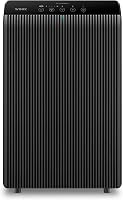
The COWAY AP-1512HH(W) combines a washable pre-filter, deodorization filter, bipolar device, and HEPA filter. Coway says its four-stage system reduces 99.97% of 0.3-micron particles, including pollen and other allergens.
Are air purifiers a scam?
Air purifiers are real appliances with useful filtration, but broad promises can mislead. A credible claim identifies what the filter captures, the test conditions, the room size, and the airflow behind the result.
Be cautious of claims that a purifier removes every pollutant, cleans an entire home from one room, or guarantees health outcomes. Ask whether the evidence measures particles or gases, and whether the test applies to the full purifier or only a filter material.
For a practical decision, consider whether you need an air purifier. It helps weigh your room, pollution sources, and expectations before you spend money.
So, do air purifiers work?
Choose an air purifier when you want to reduce airborne particles in a room and can match its airflow to that space. Choose a model with suitable media if gases or odors are your concern, and keep up with filter care.
If you need control over the source, ventilation, or settled dust, address those steps too. An air purifier works best as one part of indoor air management, not as a promise to remove everything.
Frequently asked questions
Do air purifiers really work?
Yes, an air purifier can reduce airborne particles that pass through its filter, if its clean-air delivery rate suits the room and you run it long enough. Results depend on the pollutant, airflow, placement, and filter condition.
It won't remove every source of indoor pollution or replace ventilation and source control.
Are air purifiers a scam?
Air purifiers are not inherently a scam, but claims can be exaggerated. A particle filter can capture particles that pass through it, while gases and odors need suitable sorbent media such as activated carbon.
Check independent performance information, room size, and maintenance needs before buying.
How long does an air purifier take to work?
There is no single time because it depends on room size, purifier airflow, fan setting, and how much pollution is entering the room. A higher clean-air delivery rate and longer run time can circulate more air through the filter.
Keep doors and windows in mind, since outdoor air can add new particles.
Do air purifiers work with windows open?
They can still filter some indoor air, but an open window can continually bring in new particles and dilute the effect. The impact depends on outdoor air quality, wind, room layout, and purifier capacity.
See whether an air purifier works with windows open for practical tradeoffs.
Do air purifiers remove viruses?
A properly sized particle filter may capture some airborne particles that pass through it, but a room purifier does not make a space virus-free. Filtration performance depends on airflow and use, and it should not replace other public health measures or ventilation guidance.