HEPA Filter vs Regular Filter: The Real Difference
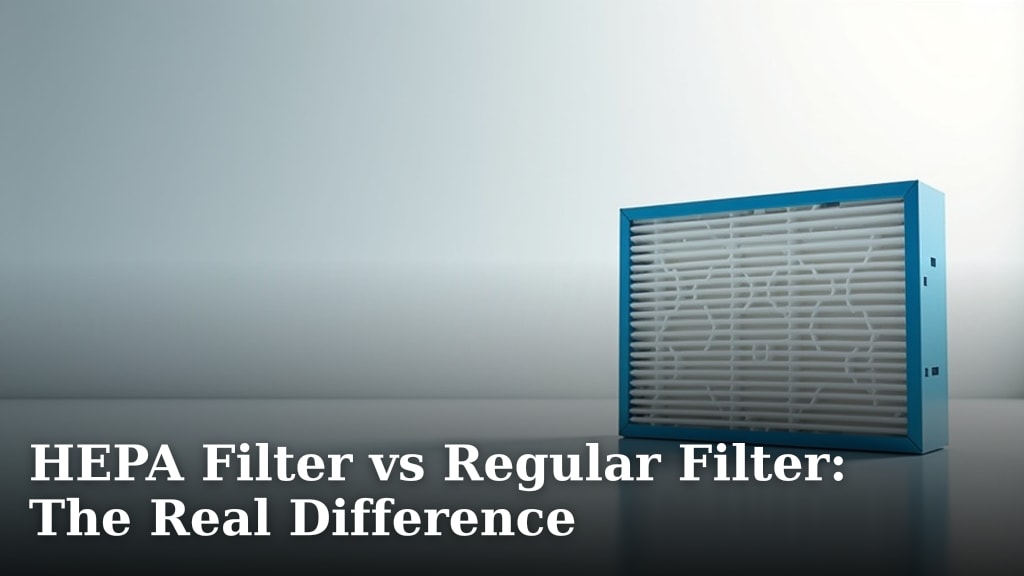
When choosing an air filter, the main difference between a HEPA filter and a regular filter is their ability to capture tiny particles. HEPA filters are designed to trap at least 99.97% of airborne particles 0.3 microns in size, making them far more effective at cleaning your air. Regular filters often catch larger dust and debris but miss much smaller irritants like pollen, mold spores, and pet dander.
This means that if you’re looking for truly cleaner air, especially for allergy or asthma sufferers, a HEPA filter is a clear step up. While regular filters do offer some level of air filtration, they simply can’t match the fine particle capture of a certified HEPA. Understanding this difference helps you make the right choice for your home’s air quality and your family’s well-being.
- HEPA filters trap at least 99.97% of tiny particles (0.3 microns).
- Regular filters capture larger dust and debris but miss small particles.
- HEPA is better for allergies, asthma, and overall air purity.
- Choose HEPA for a noticeable improvement in air quality.
Let’s dive deeper into what makes these filters different and how that impacts the air you breathe every day.
Understanding Air Filters: HEPA vs. Standard Options
So, what’s the big deal when you see “HEPA” on an air filter box? We’ve all seen them. You might be wondering if they’re really worth the extra cost over a regular filter. You’re not alone in asking this question. Let’s break down the real, everyday difference these filters make in your home. To understand HEPA filters better, learn about the difference between an air purifier vs air cleaner.
The core of the matter is how well a filter can capture the tiny things floating in your air. We’re talking about stuff you can’t even see. Things like dust mites, pet dander, mold spores, and even some bacteria. These small particles can really affect your health and comfort, especially if you have allergies or breathing issues. This is where the difference between HEPA and regular filters becomes very clear.
What Exactly is a HEPA Filter?
HEPA stands for High-Efficiency Particulate Air. It’s not just a fancy name; it’s a standard. To be called a true HEPA filter, it must meet strict government standards. In the United States, this means the filter must remove at least 99.97% of all airborne particles that are 0.3 microns in size.
Think about how small 0.3 microns really is. A human hair is about 80-100 microns wide. A single red blood cell is about 7 microns. We’re talking about particles so tiny, they can easily float through the air and get into your lungs. A certified HEPA filter is designed to catch almost all of them.
The Rigorous Testing Behind HEPA
These filters aren’t just labeled HEPA; they are tested. The standard test involves using a specific type of particle (usually a salt aerosol) and measuring how much gets through the filter. If the filter traps 99.97% or more of these tiny particles, it earns the HEPA title. This level of testing ensures you’re getting a filter that performs as advertised.
What Can HEPA Filters Capture?
- Pollen
- Mold spores
- Dust mite allergens
- Pet dander
- Bacteria
- Some viruses (though they are much smaller than 0.3 microns, they often attach to larger particles that HEPA filters catch)
How Do Regular Air Filters Work?
Regular air filters, often found in HVAC systems or standalone air purifiers, work on a simpler principle. They use a mesh or fibrous material to physically trap larger particles as air passes through them. These filters are usually rated using the MERV (Minimum Efficiency Reporting Value) scale.
MERV ratings range from 1 to 20. A lower MERV rating means the filter is better at catching larger particles like lint, dust, and carpet fibers. For example, a MERV 1-4 filter might be good for basic dust control. They are like a coarse sieve for your air.
MERV Ratings Explained (Briefly)
As the MERV rating goes up, the filter becomes more effective at capturing smaller particles. A MERV 8 filter will catch more than a MERV 4. But even high MERV filters (like MERV 13-16) don’t always meet the strict 0.3-micron capture standard of true HEPA filters. They are good, but HEPA is a higher bar for fine particle removal.
What Regular Filters Typically Catch
- Larger dust particles
- Lint
- Carpet fibers
- Visible debris
They are less effective against the smaller irritants that can cause sniffles and sneezes. If you’re looking to improve your air quality for health reasons, this is a key point to remember.
The Particle Size Difference: A Simple Analogy
Imagine you’re trying to catch things in a net. A regular filter is like a fishing net with large holes. It’s great for catching fish (larger particles like lint and big dust clumps). But smaller things, like tiny shrimp (dust mite allergens, mold spores), can easily slip right through.
Now, a HEPA filter is like a super-fine mesh net. Its holes are so small that it catches not only the fish but also the tiny shrimp and even smaller organisms. This analogy highlights how HEPA filters are designed for a much finer level of air cleaning. They are built to trap those microscopic culprits that regular filters miss.
Why Does This Matter for Your Home?
The difference in particle capture capability directly impacts the air you breathe. If your goal is simply to keep your HVAC system clean, a regular filter might do the job. However, if you or someone in your home experiences allergies, asthma, or other respiratory issues, the choice becomes much more important.
Many health organizations, like the American Lung Association, recommend good air filtration to help manage respiratory conditions. While they don’t always specify “HEPA” over other high-efficiency filters, the principle of removing fine particles is key. HEPA filters offer a proven, high level of performance in this regard.
Allergies and Asthma Sufferers: A Clear Winner
For those sensitive to airborne irritants, a HEPA filter can make a noticeable difference. By removing allergens like pet dander and mold spores, HEPA filters can help reduce the triggers that lead to sneezing, coughing, and difficulty breathing. You might find yourself feeling more comfortable and less congested in your own home.
We found that many users report fewer allergy symptoms when using air purifiers equipped with true HEPA filters. This isn’t about curing allergies, but about reducing exposure to common triggers. It’s a practical step towards a healthier indoor environment.
General Air Quality Improvement
Even if you don’t have specific health concerns, cleaner air is generally better air. A HEPA filter will capture more of the microscopic dust and debris that contribute to that general “stuffiness” some homes have. Over time, you might notice less dust settling on surfaces, and the air might simply feel fresher.
Think about the air in your home for 8-12 hours a day. Investing in a filter that does a superior job of cleaning that air seems like a reasonable choice for your family’s comfort and health. It’s a way to take control of your indoor environment.
Comparing HEPA and Regular Filters: At a Glance
To help you visualize the differences, let’s look at a simple comparison. This isn’t exhaustive, but it covers the main points.
| Feature | HEPA Filter | Regular Filter (Standard) |
|---|---|---|
| Particle Capture Standard | Captures 99.97% of particles 0.3 microns in size. | Varies widely by MERV rating; generally captures larger particles. |
| What They Catch | Very fine particles: mold, dander, bacteria, pollen, dust mites. | Larger particles: lint, visible dust, carpet fibers. |
| Ideal For | Allergy & asthma sufferers, health-conscious individuals, general air purity. | Basic dust control, protecting HVAC systems from large debris. |
| Cost | Generally higher upfront cost. | Typically lower upfront cost. |
| Airflow | Can sometimes restrict airflow more due to dense material. | Generally allows for better airflow. |
| Certification | Must meet strict US DOE standards. | Rated by MERV scale. |
Making the Right Choice for Your Needs
So, which filter is right for you? It really comes down to what you want to achieve with your air filtration. If you’re trying to improve the air quality for health reasons, especially for allergies or asthma, a true HEPA filter is likely your best bet.
If you’re simply looking to prevent large dust bunnies from clogging your furnace, a standard, lower-MERV filter might be sufficient. However, for a noticeable improvement in the overall cleanliness and healthiness of your indoor air, investing in HEPA filtration is often recommended by air quality experts.
Considerations Before You Buy
When looking at air purifiers or HVAC filters, make sure the product specifies “True HEPA” or meets the 0.3-micron standard. Some products use “HEPA-type” or “HEPA-like” filters, which don’t meet the same rigorous standards. Always check the certification or specifications.
Also, remember that filters need to be replaced. A clogged filter won’t work effectively, no matter how good it is. Check your filter’s manual for recommended replacement schedules. Using a HEPA filter means you’re investing in cleaner air, so keeping it maintained is important.
Your Checklist for Cleaner Air:
- Check your home’s needs: Allergies, asthma, or just general freshness?
- Look for “True HEPA”: Avoid “HEPA-type” filters.
- Understand MERV: Know that higher MERV is better for fine particles, but HEPA is the gold standard for 0.3 microns.
- Consider your system: Ensure your HVAC system can handle the airflow resistance of a HEPA filter if using one there.
- Factor in replacement cost: HEPA filters are an ongoing purchase.
- Read reviews: See what other users experienced with specific products.
Conclusion
You’ve learned that the core difference between HEPA and regular filters comes down to particle capture. True HEPA filters are engineered to trap an impressive 99.97% of tiny particles, down to 0.3 microns. Regular filters, while useful for larger debris, miss these microscopic irritants. For allergy and asthma sufferers, or anyone seeking noticeably cleaner air, a HEPA filter offers a clear advantage in reducing airborne triggers. Your next step? Review your home’s air quality needs and look for “True HEPA” certification when you’re ready to upgrade.
Frequently Asked Questions
Are HEPA filters always better than regular filters?
HEPA filters are generally better for capturing very small particles like allergens, mold spores, and bacteria. Regular filters are sufficient for basic dust and debris, and may offer less airflow restriction. Your choice depends on whether you need superior fine particle removal for health reasons.
Can I use a HEPA filter in my home’s HVAC system?
You can, but check your system’s specifications. HEPA filters can sometimes restrict airflow more than regular filters, which could strain your HVAC system if it’s not designed for it. Consult your HVAC manual or a professional.
What does “True HEPA” mean, and why is it important?
“True HEPA” means the filter meets the strict US government standard of capturing at least 99.97% of particles at 0.3 microns. Filters labeled “HEPA-type” or “HEPA-like” do not meet this rigorous standard and are less effective.
How often should I replace a HEPA filter?
Replacement frequency varies by manufacturer and usage, but HEPA filters often need replacing more often than regular filters. Always check the product manual for specific recommendations to ensure optimal performance.
Will a HEPA filter make my home smell fresher?
By removing microscopic particles that can carry odors, a HEPA filter can contribute to fresher-smelling air. However, they are not designed specifically as odor absorbers, which is a function often handled by filters with activated carbon.