What Is a HEPA Air Purifier? A Quick Definition
A HEPA air purifier is a device designed to clean the air in your home. Its main job is to trap To understand what makes a HEPA air purifier unique, it helps to know the difference between an air purifier vs air cleaner.tiny particles like dust, pollen, and pet dander. HEPA stands for High-Efficiency Particulate Air, meaning it captures at least 99.97% of airborne particles 0.3 microns in size.
Think of it as a super-powered vacuum for your air. These purifiers use a special filter that acts like a very fine net. This filter is crucial for reducing allergens and improving your indoor air quality, especially if you deal with allergies or asthma. Many find them helpful for creating a healthier living space.
- HEPA stands for High-Efficiency Particulate Air.
- It filters out at least 99.97% of tiny airborne particles.
- Common particles trapped include dust, pollen, and pet dander.
- They can help reduce allergens and improve indoor air quality.
- Look for the HEPA certification for best results.
So, how exactly does this magic happen, and what should you look for? Let’s break down what a HEPA air purifier really is and what it can do for your home.
Understanding the HEPA Air Filter’s Core Function
So, what exactly makes a HEPA air purifier stand out? At its heart, it’s all about the HEPA filter itself. This isn’t just any filter you might find in a vacuum cleaner. It’s a meticulously designed component engineered to capture an incredibly high percentage of airborne particles.
The name HEPA is short for High-Efficiency Particulate Air. This designation isn’t just a marketing term; it comes with strict standards. To earn the HEPA label, a filter must capture at least 99.97% of particles that are 0.3 microns in size.
The 0.3 Micron Standard: Why It Matters
You might be wondering why 0.3 microns is the magic number. It’s not arbitrary. This particular size is considered the Most Penetrating Particle Size (MPPS). Think of it as the Goldilocks zone for particle capture.
Particles smaller than 0.3 microns tend to move more erratically, bouncing around with air currents. Particles larger than 0.3 microns are easier to catch. The 0.3-micron size is the trickiest to trap. A filter that can effectively capture particles at this size is remarkably efficient across a wide range of particle sizes.
To achieve this, HEPA filters use a dense mat of randomly arranged fibers. These fibers work through several mechanisms to trap particles:
- Impaction: Larger particles simply collide with the fibers and stick.
- Interception: Medium-sized particles follow the airflow but brush against a fiber as they pass.
- Diffusion: Very small particles move randomly (Brownian motion) and are more likely to hit a fiber.
What Can a True HEPA Filter Actually Capture?
The list of what a HEPA filter can trap is quite extensive. It goes far beyond the visible dust bunnies you might see under your sofa. You’re looking at microscopic threats to your indoor air quality.
Here are some common culprits a HEPA filter is designed to capture:
- Pollen: Especially during allergy seasons, this can be a major indoor irritant.
- Dust Mites: Tiny creatures that live in dust, their waste products are a common allergen.
- Pet Dander: Microscopic flakes of skin shed by animals.
- Mold Spores: These can float in the air and cause respiratory issues.
- Bacteria: Many types of airborne bacteria are trapped.
- Viruses: While often smaller than 0.3 microns, they frequently attach to larger particles that HEPA filters catch.
- Smoke Particles: From cooking or environmental sources.
- Airborne Pollutants: From outdoor pollution that enters your home.
When you see a HEPA filter in action, it’s like a microscopic bouncer for your air. It lets the clean air through while stopping the problematic particles in their tracks.
Beyond the HEPA Filter: How an Air Purifier Works
While the HEPA filter is the star of the show, an air purifier is a system. It needs a few other components to function effectively and deliver clean air back into your room.
Think of it like a sophisticated fan designed to pull air through the filtering mechanism. You’ll find these key parts in most HEPA air purifiers:
The Fan: The Air Mover
Every air purifier has a fan. Its job is to draw the polluted air from your room into the unit. The strength and efficiency of the fan determine how much air the purifier can process in a given time. This is often measured in CADR (Clean Air Delivery Rate).
A more powerful fan can circulate more air, cleaning a larger space faster. You’ll usually find fan speed settings on the unit, allowing you to adjust the cleaning power based on your needs.
The Pre-Filter: The First Line of Defense
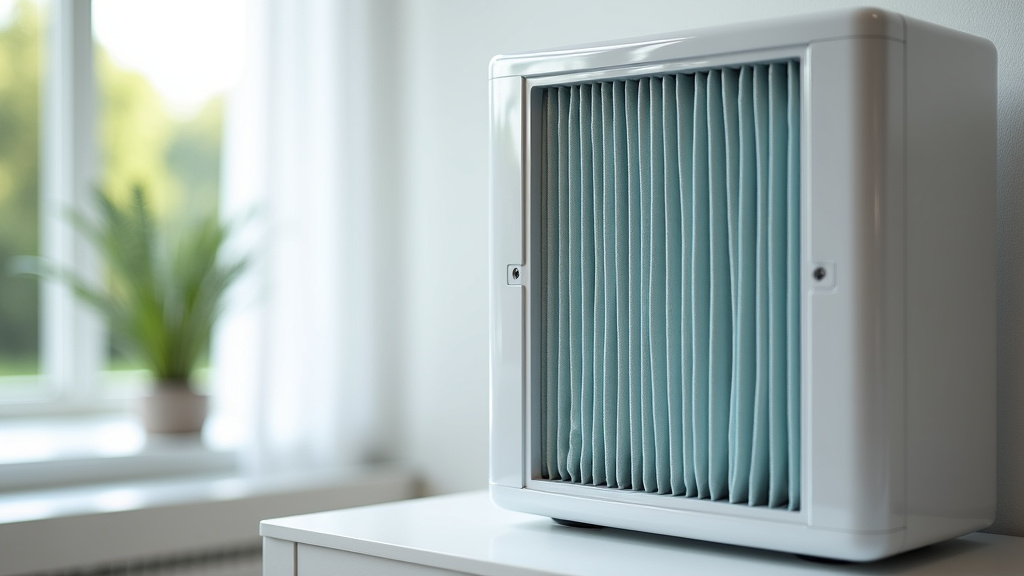
Before the air even reaches the HEPA filter, it typically passes through a pre-filter. This is often a mesh screen.
Its main purpose is to catch the larger particles. Things like visible dust, hair, and pet fur are caught here. Why is this important? It protects the HEPA filter. By removing the big stuff first, the pre-filter extends the lifespan of the more expensive HEPA filter and keeps it from getting clogged too quickly.
Many pre-filters are washable or vacuumable, making maintenance straightforward.
Activated Carbon Filters: Tackling Odors and Gases
Many HEPA air purifiers also include a layer of activated carbon. This material is highly porous and has a huge surface area. It’s excellent at adsorbing, or trapping, gases, odors, and volatile organic compounds (VOCs).
So, while the HEPA filter tackles the physical particles, the carbon filter works on the chemical side of air pollution. This is what helps eliminate smells from cooking, pets, smoke, or even chemical off-gassing from furniture and cleaning products.
The Housing and Controls: Bringing It All Together
The outer casing of the air purifier holds all these components together. It’s also where you’ll find the controls. These can range from simple on/off switches and fan speed adjustments to more advanced features like timers, air quality sensors, and filter replacement indicators.
Distinguishing True HEPA from “HEPA-like” Filters
This is a really important point for shoppers. Not all filters labeled as “HEPA” are created equal. You need to know the difference to ensure you’re getting the performance you expect.
We found that some manufacturers use terms like “HEPA-type” or “HEPA-like.” These filters may capture a good amount of particles, but they don’t meet the strict 99.97% efficiency standard for 0.3-micron particles.
What to Look For: The “True HEPA” Label
To be sure you’re getting the real deal, always look for the term “True HEPA”. This indicates that the filter meets the United States Department of Energy (DOE) standard. Some manufacturers might also state that their filter meets European standards (EN 1822) which can be even more stringent.
It’s also helpful to check if the manufacturer provides third-party testing results or certifications. This adds an extra layer of verification.
Understanding HEPA Filter Performance Claims
When you see a filter claiming to be 99% efficient, but not “True HEPA,” it might be referring to a different particle size. For example, it might be 99% efficient at capturing much larger particles.
The 0.3-micron particle size is key because of the mechanisms we discussed earlier. It’s the hardest size to catch, and that’s what “True HEPA” guarantees.
Consider this comparison:
| Filter Type | Efficiency Standard (for 0.3 micron particles) | What It Means For You |
|---|---|---|
| True HEPA | At least 99.97% | Captures nearly all microscopic particles, including allergens, bacteria, and virus-carrying particles. |
| HEPA-Type/Like | Varies, often lower than True HEPA | Captures a good amount of larger particles, but may miss a significant portion of the smallest, most problematic ones. |
We advise shoppers to always check the product specifications carefully. Don’t let marketing terms mislead you. A true HEPA filter offers the highest level of particle filtration.
When Does a HEPA Air Purifier Make Sense for Your Home?
So, is a HEPA air purifier a good investment for your living space? The answer often depends on your specific needs and concerns about your indoor air.
We found that people who benefit most typically fall into a few categories:
For Allergy and Asthma Sufferers
If you or someone in your household deals with allergies or asthma, a HEPA air purifier can be a game-changer. These conditions are often triggered by airborne allergens like pollen, dust mite debris, pet dander, and mold spores.
By removing these particles from the air, a HEPA purifier can help reduce the frequency and severity of allergy or asthma symptoms. Many allergy organizations suggest them as a helpful tool for improving indoor air quality.
For Pet Owners
Love your pets but not their dander? A HEPA air purifier can significantly reduce the amount of pet dander and hair circulating in your home. This can make living with furry friends more comfortable, especially for those with sensitivities.
For Improving General Air Quality
Even if you don’t have specific allergies or pets, a HEPA air purifier can still contribute to a healthier home environment. It helps remove general dust, smoke particles, and other airborne irritants that can affect anyone.
It’s about creating a cleaner, more comfortable breathing space for everyone. Many people simply appreciate the peace of mind that comes with knowing their air is being filtered.
Quick Checklist for Considering a HEPA Purifier
Here’s a quick way to see if a HEPA air purifier might be right for you:
- Do you or someone in your home suffer from allergies?
- Is asthma a concern for anyone in your household?
- Do you own pets that shed dander and hair?
- Are you sensitive to dust or other airborne particles?
- Do you live in an area with significant outdoor air pollution?
- Do you want to reduce odors from cooking or pets?
If you answered yes to any of these, a HEPA air purifier is likely a worthwhile consideration for your home.
Conclusion
You’ve learned that a HEPA air purifier is a powerful tool for improving your home’s air quality. Its true HEPA filter captures at least 99.97% of tiny particles, including allergens, dust, and dander. Remember to look for the “True HEPA” label to ensure you’re getting the best filtration. If allergies, asthma, pets, or general air freshness are concerns for your household, a HEPA air purifier is a worthy consideration. Ready to breathe easier? Start comparing models to find the right fit for your home and needs.
Frequently Asked Questions
What’s the difference between “HEPA-type” and “True HEPA”?
A “True HEPA” filter meets strict standards, capturing 99.97% of particles 0.3 microns in size. “HEPA-type” or “HEPA-like” filters may capture more particles than basic filters, but they don’t meet the same rigorous efficiency standard. You want “True HEPA” for the best particle capture.
Do HEPA air purifiers help with odors?
While the HEPA filter itself focuses on trapping physical particles, many HEPA air purifiers include an activated carbon filter. This carbon layer is excellent at adsorbing gases and odors, helping to remove smells from pets, cooking, and smoke.
How often do I need to replace a HEPA filter?
Replacement frequency varies by model and usage, but HEPA filters typically need replacing every 6 to 12 months. Many units have filter indicator lights to let you know when it’s time. Regularly changing filters ensures your purifier runs efficiently.
Can a HEPA air purifier remove viruses?
True HEPA filters are designed to capture 99.97% of particles 0.3 microns in size. While many viruses are smaller, they often travel attached to larger particles like dust or moisture droplets. A HEPA filter can effectively trap these virus-carrying particles.
Are HEPA air purifiers noisy?
Noise levels depend on the fan speed and the unit’s design. Most air purifiers have multiple fan settings, with lower settings being quieter. Higher settings clean the air faster but will produce more sound. Check product reviews for specific noise level information.