What Is a Negative Ion Air Purifier? How It Works
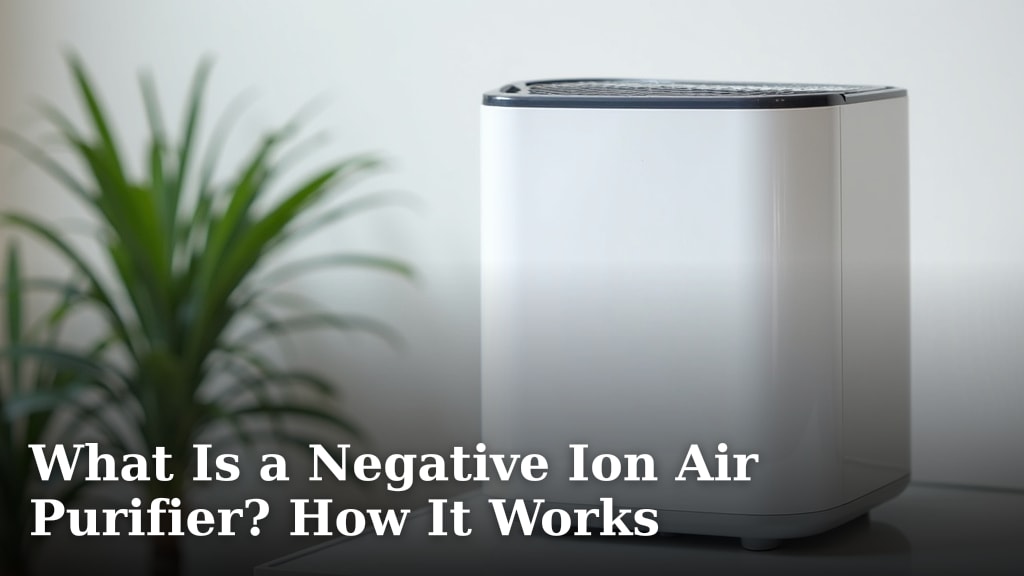
A negative ion air purifier is a device that cleans indoor air by releasing electrically charged particles called negative ions. These ions attach to airborne contaminants, making them heavier so they fall out of the air or stick to surfaces.
Unlike traditional HEPA filter purifiers that trap particles in a dense material, these units have fewer moving parts and often don’t require replacement filters. Many experts note that while they can reduce some particles, a key concern is that some models can produce ozone, which can be an irritant.
- A negative ion air purifier works by emitting ions to clump together dust and allergens.
- They have a simpler design with no filters to buy and change.
- They are sometimes praised for being quiet and low-maintenance.
- However, some models can generate ozone, a lung irritant, as a byproduct.
- It’s important to check ozone emission levels before buying any ionizer.
Below, we’ll break down exactly how these devices work, their potential benefits, and important things to watch for, so you can decide if one is right for your home.
Conclusion
Negative ion air purifiers offer a quiet, low-maintenance way to reduce some dust and allergens from your indoor air. They work by releasing charged particles that clump contaminants together, making them fall from the air. However, a key takeaway is the potential for ozone production, which can irritate your lungs. Research has found that ozone levels vary widely between models, so it’s crucial to check for safety certifications. Your best next step is to look for units labeled as ozone-safe or with UL 2998 certification. Compare product specifications and read user reviews to find a reliable option for your home.
Frequently Asked Questions
Do negative ion air purifiers really improve air quality?
They can reduce certain particles like dust and pollen by causing them to settle. However, studies have found their overall effectiveness is limited compared to HEPA filters. For significant air quality issues, you might need a more comprehensive solution.
Are negative ion air purifiers safe for children and pets?
Safety depends on the model and its ozone emissions. Always choose units with low or zero ozone output to avoid potential irritation. If anyone in your home has asthma or allergies, consult a doctor before use.
How long do negative ion air purifiers last?
Most have a long lifespan since they have no filters to replace. The ionizing components can wear out over time, typically after several years. Check the manufacturer’s warranty for expected durability.
Can I leave a negative ion air purifier on all the time?
Yes, most are designed for continuous operation to maintain air quality. However, if the unit produces noticeable ozone or has a strong smell, turn it off in poorly ventilated areas. Follow the manufacturer’s guidelines for safe use.
Do negative ion air purifiers help with pet odors?
They may help with some odors by clumping odor-causing particles, but results can vary. For strong or persistent smells, an activated carbon filter might be more effective. Consider a purifier that combines both technologies for better odor control.