What Is an H13 HEPA Filter? Grades Explained
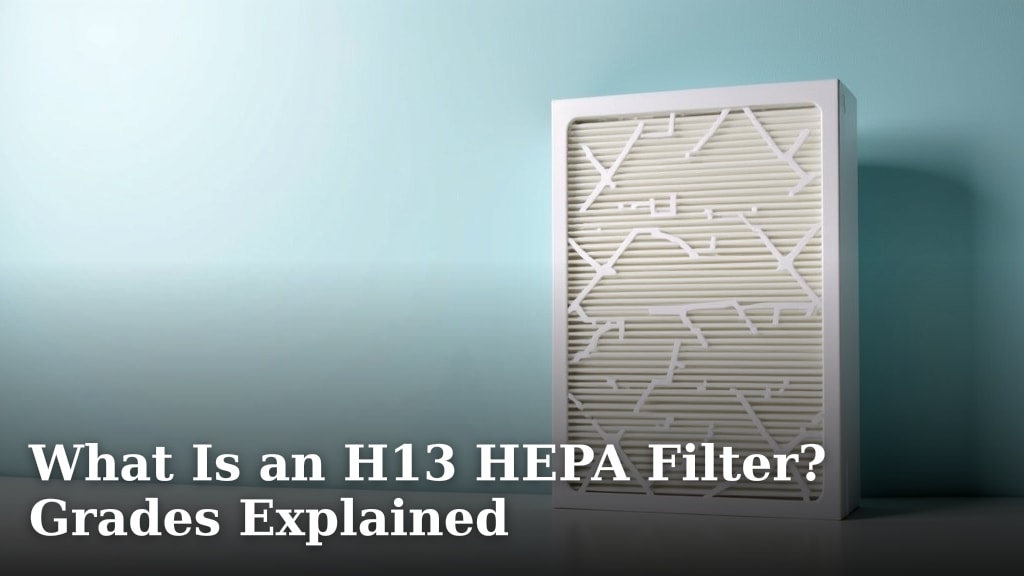
An H13 HEPA filter is a high-efficiency particulate air filter that captures at least 99.95% of airborne particles. This includes dust, pollen, mold spores, and bacteria as small as 0.3 microns. It’s a top-tier filter for cleaner air in your home or office.
When you’re looking for the best air quality, understanding filter grades is key. H13 is part of the European EN 1822 standard, which ranks filters by their efficiency. Many air purifiers use H13 filters because they offer excellent particle removal for health and comfort.
- H13 HEPA filters capture 99.95% of particles.
- They are effective against very small particles like dust and mold.
- This filter grade is part of the European EN 1822 standard.
- It’s a great choice for improving indoor air quality significantly.
Let’s dive into what makes an H13 filter stand out and how its grade compares to others.
Understanding HEPA Filter Grades: What Does H13 Mean?
So, you’re looking into air purifiers and keep seeing “H13 HEPA.” What exactly does that mean for the air you breathe? Think of it like a school grading system for air filters. H13 is a specific grade that tells you just how good the filter is at trapping tiny particles. It’s part of a system that helps shoppers know what they’re getting.
This rating comes from a European standard called EN 1822. This standard is pretty strict about how filters are tested. It measures how well they capture particles of a specific size. An H13 filter meets a high bar in this testing. We found that this grade is often considered the standard for good home air purification.
What Makes a HEPA Filter “HEPA”?
Before we dive deeper into H13, let’s quickly cover what HEPA means. HEPA stands for High-Efficiency Particulate Air. For a filter to be called true HEPA, it must capture at least 99.97% of particles that are 0.3 microns in size. This is a very small size, smaller than most bacteria and viruses. It’s like finding a needle in a haystack, but for airborne particles!
The Magic of the 0.3 Micron Size
You might wonder why 0.3 microns is the standard test size. It’s actually the most difficult size particle for filters to trap. Smaller particles often move more like gas molecules, bouncing around the filter fibers. Larger particles are easier to catch. So, a filter that’s great at 0.3 microns will likely be even better at trapping particles both larger and smaller.
When a filter meets this 99.97% standard for 0.3-micron particles, it’s a genuine HEPA filter. This means it’s going to do a fantastic job removing common indoor air pollutants. Things like dust mites, pet dander, and pollen don’t stand a chance.
Breaking Down the EN 1822 Standard and HEPA Grades
The EN 1822 standard is what helps us understand different levels of HEPA performance. It’s a more detailed way of rating filters than the general “HEPA” label. This standard has different classes, and H13 is one of them. It’s important to know that the “H” simply stands for HEPA.
What is the EN 1822 Standard?
The EN 1822 standard provides a rigorous testing procedure. It tests filters at their most challenging particle size. This standard is widely used in Europe and is respected globally. It helps ensure that filters perform as advertised. You can trust that a filter rated under this standard has been put through its paces.
Different HEPA Grades Explained
Within the EN 1822 standard, there are several grades. These grades tell you the filter’s efficiency. Think of it as a report card for the filter’s ability to clean air. The main grades you’ll see are H10, H11, H12, H13, and H14. Each level offers increasing effectiveness.
HEPA H10, H11, and H12 Filters
Filters rated H10, H11, and H12 are considered “true HEPA” by some definitions. They capture a high percentage of particles. For example, H10 filters capture at least 85% of particles. H12 filters can capture at least 99.5% of particles. While good, they are not as effective as H13 or H14. We found that these grades are often used in less demanding applications or where cost is a bigger factor.
HEPA H13 Filters: The Goldilocks Grade
This is where H13 shines. An H13 HEPA filter must capture at least 99.95% of airborne particles that are 0.3 microns in size. This is a very high level of filtration. Many experts agree that H13 is an excellent balance between high performance and cost. It effectively removes allergens, dust, mold spores, and even some bacteria from your air.
HEPA H14 Filters: The Superstars
The H14 grade takes things up another notch. These filters capture at least 99.995% of particles. They are extremely efficient and are often used in highly sensitive environments. Think cleanrooms or hospitals where air purity is absolutely critical. For most homes, an H13 filter is more than sufficient.
Here’s a quick comparison:
| Filter Grade | Minimum Efficiency (at 0.3 microns) | Common Use Cases |
|---|---|---|
| H10 | 85% | General ventilation systems |
| H11 | 95% | Some consumer air purifiers |
| H12 | 99.5% | Higher-end consumer air purifiers |
| H13 | 99.95% | Most home air purifiers, allergy sufferers |
| H14 | 99.995% | Hospitals, cleanrooms, critical environments |
Why H13 HEPA Filters Are a Great Choice for Your Home
So, why should you consider an air purifier with an H13 HEPA filter? It really comes down to the quality of the air you want to breathe. If you suffer from allergies or asthma, cleaner air can make a big difference. H13 filters are brilliant at capturing those tiny irritants that can trigger symptoms.
Benefits of Using an H13 Filter
The primary benefit is, of course, cleaner air. We found that H13 filters are highly effective at removing a wide range of airborne contaminants. This includes dust, pollen, pet dander, mold spores, and bacteria. They can also help reduce odors.
For people with respiratory issues, this can mean fewer flare-ups and an easier time breathing. Even if you don’t have allergies, breathing cleaner air generally feels better. It’s like wiping down dusty surfaces; you notice the difference right away.
Is H13 the Right Choice for You?
For most households, an H13 HEPA filter is an excellent investment. It offers a fantastic level of air purification without the premium price tag of H14 filters. If you’re looking to improve your indoor air quality for health or comfort, H13 is a solid standard to aim for. You’re getting a filter that’s scientifically proven to remove nearly all the nasty stuff floating around.
Think about it: your home should be a sanctuary. An H13 filter helps make sure the air in that sanctuary is as clean as possible. Many air quality guidelines suggest using high-efficiency filters for occupied spaces (CDC). An H13 filter certainly fits that bill.
Key Takeaways for Choosing Your Air Purifier Filter
When you’re shopping for an air purifier, keep these points in mind about H13 HEPA filters:
- Understand the Grade: H13 means the filter captures at least 99.95% of 0.3-micron particles.
- Check the Standard: Ensure the filter is rated according to EN 1822 for reliable performance.
- Compare to Other Grades: H13 is significantly better than lower grades like H10-H12.
- Consider Your Needs: H13 is ideal for most homes, especially for allergy and asthma sufferers.
- H14 is Higher, but Often Not Necessary: H14 filters offer slightly better performance but come at a higher cost.
- Look for True HEPA Claims: While H13 is a specific grade, it aligns with the general idea of true HEPA filtration.
By understanding what an H13 HEPA filter is and how it performs, you can make a more informed decision. You’re not just buying a filter; you’re investing in cleaner air for you and your family.
Conclusion
You’ve learned that an H13 HEPA filter offers excellent air purification for your home. It’s a trusted standard, capturing at least 99.95% of tiny airborne particles. We found this grade hits a sweet spot, providing superior filtration without the high cost of even higher-rated filters. For allergy sufferers or anyone seeking fresher indoor air, an H13 filter is a smart, effective choice.
Now that you understand the H13 grade, consider your home’s air quality needs. Look for air purifiers that clearly state they use an H13 HEPA filter to make your next purchase with confidence.
Frequently Asked Questions
Is an H13 HEPA filter better than a “true HEPA” filter?
The term “true HEPA” often refers to filters meeting the US standard of 99.97% at 0.3 microns. An H13 filter, under the European EN 1822 standard, captures 99.95% at 0.3 microns. Both are highly effective, with H13 being a specific, well-defined grade.
Can an H13 HEPA filter remove viruses and bacteria?
H13 filters are rated for particles 0.3 microns in size. While they may capture some bacteria and viruses that clump together and are larger than 0.3 microns, their primary strength is trapping dust, pollen, and mold spores. For very small airborne pathogens, some virus reduction may occur.
Do H13 filters require special maintenance?
H13 HEPA filters cannot be washed and must be replaced according to the manufacturer’s recommendations, typically every 6-12 months. Regular cleaning of the air purifier unit itself, as per your manual, is important for optimal performance.
How does an H13 HEPA filter compare to an H14 filter?
An H13 filter captures at least 99.95% of particles at 0.3 microns. An H14 filter is more efficient, capturing at least 99.995% of particles. While H14 offers slightly higher filtration, H13 is generally more than sufficient for most home environments.
Where is an H13 HEPA filter most commonly used?
H13 HEPA filters are widely used in high-quality residential air purifiers, making them ideal for homes with allergy or asthma sufferers. They are also found in some medical settings and offices where improved air quality is desired.