What Makes a Filter a HEPA Filter? The Standard
A HEPA filter is a type of air filter that meets a specific standard for trapping particles. To be considered true HEPA, a filter must capture at least 99.97% of particles that are 0.3 microns in size. This is the widely accepted industry benchmark.
This standard is important because it tells you how effective a filter is at cleaning the air in your home. Many filters claim to be HEPA, but only those meeting the rigorous HEPA standard can truly deliver. We found this distinction makes a big difference in air quality.
- HEPA filters trap 99.97% of tiny particles.
- The standard focuses on particles 0.3 microns wide.
- This ensures effective air cleaning for your home.
- Look for filters that meet the official HEPA definition.
Ready to understand what makes a filter earn that “HEPA” title? Let’s walk through the key details of the HEPA standard so you can make the best choice for your air.
Understanding the True HEPA Standard for Air Filters
So, you’re looking for an air filter that actually works. You want clean air, and you’ve heard the term “HEPA.” But what does that really mean? It’s not just a fancy name. A true HEPA filter has to meet a very specific benchmark. This standard ensures the filter can trap tiny particles that can affect your air quality.
We found that understanding this standard is key to avoiding confusion. Many filters claim to be HEPA, but only a select few actually meet the official definition. This is especially important if you’re concerned about allergies, asthma, or just want healthier air at home.
What Does HEPA Actually Stand For?
HEPA is an acronym. It stands for High-Efficiency Particulate Air (or sometimes, High-Efficiency Particulate Absorbing). Think of it as a badge of honor for air filters. It tells you the filter has passed a stringent test and meets a certain level of performance.
This isn’t just a marketing term; it’s a technical designation. It’s backed by testing and specific requirements. We found that knowing what HEPA stands for helps you appreciate the science behind it.
The Core HEPA Standard: 99.97% of 0.3 Microns
Here’s the heart of the HEPA standard. A filter is only considered true HEPA if it can capture at least 99.97% of particles. What size are these particles? They are specifically 0.3 microns in diameter.
Why 0.3 microns? This size is often considered the most difficult to capture. Smaller particles might be easier for some filters to grab, and larger ones can be captured by simpler means. The 0.3-micron size hits a sweet spot for airborne irritants like dust mites, pollen, and mold spores. Many studies show these particles are common culprits for respiratory issues (National Institute of Environmental Health Sciences).
Why This Specific Size Matters
Think of it like a sieve. You want a sieve fine enough to catch the smallest grains of sand but not so fine that it clogs up instantly. The 0.3-micron size is the standard for a reason. It represents a particle size that can bypass many other types of filters.
When a filter can capture 99.97% of these “worst-case” particles, it’s likely to be very effective against a wide range of other sizes too. This is why the 0.3-micron benchmark is so important. It’s a reliable indicator of performance.
The 99.97% Efficiency Target
That 99.97% number is a very high bar. Imagine a thousand tiny specks. A HEPA filter would catch 997 of them. That leaves only three specks left behind. This level of efficiency means a massive amount of airborne pollutants are removed from your air.
This figure isn’t pulled out of thin air. It’s based on rigorous testing methods. These tests are designed to prove the filter’s ability to trap these specific particles. We found this level of detail reassuring when looking for the best air purification.
How Are HEPA Filters Tested?
So, how do we know a filter meets this tough standard? It undergoes specific testing. This testing is usually done by independent laboratories or by the manufacturer under strict guidelines.
The process involves using a test aerosol (like a salt or dioctyl phthalate, or DOP, aerosol) and a special instrument called a particle counter. The filter is challenged with this aerosol, and the counter measures how many particles get through. If the filter meets the 99.97% efficiency for 0.3-micron particles, it earns the HEPA designation.
The Role of Standards Organizations
Different countries and regions have bodies that set standards for air filters. In the United States, the Department of Energy (DOE) has historically set standards for HEPA filters used in certain applications. For consumer products, organizations like the Association of Home Appliance Manufacturers (AHAM) also provide testing and certification programs.
These organizations help ensure consistency and reliability. They provide a framework so that when you see “HEPA,” you know it refers to a tested and verified performance level. We found that looking for certifications from these groups can add another layer of trust.
What About “True HEPA” vs. “HEPA-like” or “HEPA-Type”?
This is where things can get a bit tricky for shoppers. You’ll often see filters advertised as “HEPA-like,” “HEPA-type,” or “99% HEPA.” What does this mean? It means they are close to the standard but don’t quite meet it.
A filter labeled “HEPA-like” might capture 99% of particles, but that 1% difference can be substantial when dealing with airborne irritants. Or it might meet the HEPA standard for *some* particle sizes, but not the critical 0.3-micron size. A filter that is truly HEPA captures 99.97% of particles at the 0.3-micron size.
The Importance of the 0.3 Micron Mark
The distinction is crucial. Imagine your goal is to stop all but three out of every thousand tiny irritants. A “HEPA-like” filter might only stop 990 out of a thousand. That’s still a lot, but it’s not the same level of protection.
Many experts agree that the 0.3-micron, 99.97% benchmark is the gold standard for air filtration efficiency. It’s the number you want to look for to ensure you’re getting the most effective air cleaning possible for your home. We found that focusing on this specific metric helps cut through marketing noise.
Are There Different Types of HEPA Filters?
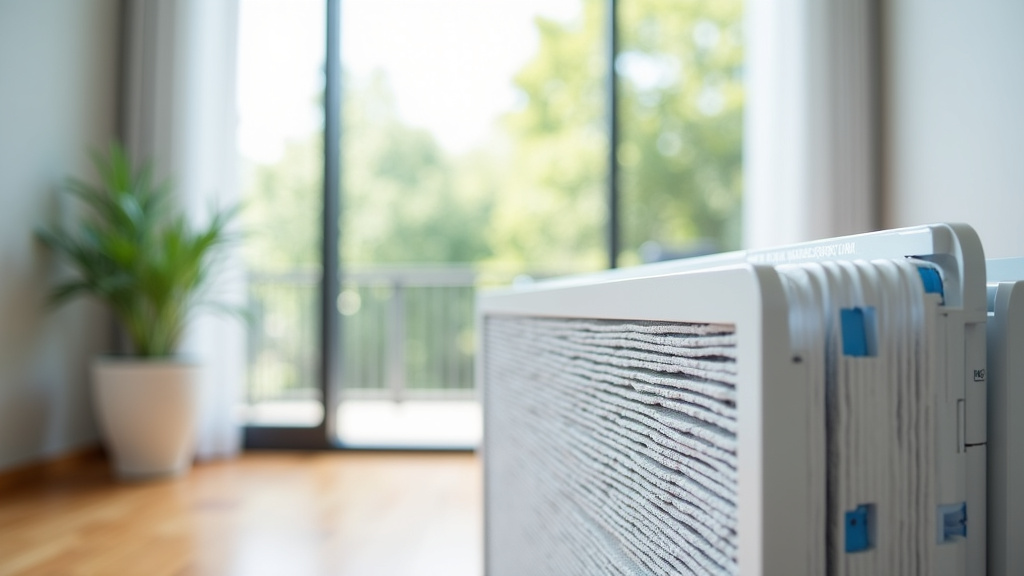
While the standard itself is fixed, the filters that meet it can be made from different materials and in different ways. The most common type is the pleated filter made from fiberglass or synthetic fibers.
The pleating increases the surface area. This means more air can pass through the filter while still being trapped. The density and weave of the filter material are engineered to catch those tiny particles efficiently. It’s a clever design that balances airflow with filtration power.
Material and Construction
The materials used in HEPA filters are designed to be electrostatically charged. This charge helps them attract and hold onto particles, like a static cling effect. This is in addition to the mechanical trapping that happens due to the fine mesh of the filter fibers.
Some newer filters might use different materials, like specialized membranes. However, they must still pass the same stringent tests to be called true HEPA. The manufacturing process is also important. A poorly constructed filter, even with the right materials, might leak air around the edges, reducing its effectiveness.
HEPA Filters in Everyday Products
You’ll find HEPA filters in a variety of products designed to clean your air. The most common are air purifiers, which are dedicated units for cleaning the air in a room. They are built around a powerful fan and a HEPA filter system.
You’ll also find them in:
- Vacuum cleaners: Many high-end vacuums use HEPA filters to trap fine dust and allergens that the vacuum picks up, preventing them from being blown back into the air.
- HVAC systems: Some home heating and cooling systems can be fitted with HEPA filters, though it’s important to check if your system can handle the airflow resistance.
- Automotive air filters: Some cars offer HEPA cabin air filters for cleaner interior air.
Checking for True HEPA Certification
When you’re shopping, look for the specific wording. Does it say “True HEPA”? Does it mention the 99.97% efficiency at 0.3 microns? Is there a certification mark from a reputable organization?
Here’s a quick checklist to help you identify a true HEPA filter:
- It explicitly states “True HEPA” or “100% HEPA.”
- It specifies capturing 99.97% of particles.
- It mentions the 0.3-micron particle size in its performance claims.
- Look for certifications from AHAM or other recognized testing bodies.
- Avoid filters that use vague terms like “HEPA-like” or “HEPA-type.”
- Check the manufacturer’s specifications for detailed performance data.
By paying attention to these details, you can be confident you’re choosing a filter that meets the high standards required to truly clean your air. It’s about making an informed choice for a healthier home environment.
Conclusion
Choosing a true HEPA filter means you’re investing in better air quality for your home. Remember, the standard is strict: 99.97% of particles at 0.3 microns. This isn’t just marketing; it’s a verified level of performance. Filters labeled “HEPA-like” or “HEPA-type” don’t meet this rigorous benchmark. When shopping, always look for explicit claims of “True HEPA” and the specific performance metrics. Your next step is to check the product packaging or manufacturer’s website for these details to ensure you’re getting the genuine article for cleaner air.
Frequently Asked Questions
What’s the biggest difference between “True HEPA” and “HEPA-like” filters?
The main difference lies in performance. A True HEPA filter must capture at least 99.97% of particles that are 0.3 microns in size. A “HEPA-like” or “HEPA-type” filter may capture fewer particles or only at different sizes, falling short of the official standard.
Why is the 0.3-micron particle size so important for HEPA filters?
The 0.3-micron size is considered the most challenging particle size to capture. It’s thought to bypass many filters more easily than smaller or larger particles. Meeting the standard at this size indicates a filter is highly effective across a broad range of airborne irritants.
Can I trust filters that say “99% HEPA”?
Generally, no. The official HEPA standard requires 99.97% efficiency. A filter claiming only 99% efficiency is missing that extra 0.97%, which can be a significant amount when dealing with microscopic particles.
Do HEPA filters in vacuum cleaners work the same way as in air purifiers?
Yes, the HEPA standard applies the same way. A HEPA filter in a vacuum cleaner captures 99.97% of 0.3-micron particles. This prevents fine dust and allergens picked up by the vacuum from being released back into your home’s air.
How can I be sure a filter I buy is actually HEPA certified?
Look for clear labeling that states “True HEPA” and mentions the 99.97% efficiency at 0.3 microns. Reputable brands may also display certifications from testing organizations like AHAM. Always check the product specifications to verify its performance claims.