Cool Mist Humidifier vs Vaporizer: Which to Choose? (November 2026)
Choose a cool mist humidifier for room moisture without heated water; choose a vaporizer if you specifically want warm steam. The terms can overlap, so check how a device makes mist before you buy.
On this page (6 sections)
Choose a cool mist humidifier for room moisture without heated water; choose a vaporizer if you specifically want warm steam. In a cool mist vaporizer vs humidifier comparison, the names can be confusing because some cool mist products use “vaporizer” in their title.
A humidifier adds moisture to indoor air. A vaporizer usually heats water to release steam, but product names alone don't reliably tell you how a device works.
If you're comparing broader types, start with the humidifier buying guide. Then choose by how the unit makes moisture, how you'll clean it and where it will sit.


Cool mist vaporizer vs humidifier: how do they differ?
A cool mist humidifier releases moisture without heating the water, while a traditional vaporizer boils or heats water to make steam. Both add moisture, but their output and heat-related risks differ.
Ultrasonic humidifiers use vibration to create fine droplets. Evaporative models use a fan to move air through a wet wick or filter.
Warm mist units heat water, and are often called vaporizers.
These labels are not used consistently across every product. Some cool mist units include “vaporizer” in the name, so check the operation method and mist type rather than relying on the word alone.
What does “cool mist vaporizer” mean?
It often means a cool mist humidifier, not a steam unit. For example, some ultrasonic models are described with both terms even though they produce cool mist.
The Crane Personal Ultrasonic Cool Mist Travel Humidifier is an example of a product name that uses “vaporizer” alongside “cool mist.” Its listed operation is ultrasonic, and its output is cool mist.
A warm mist humidifier is a different category. See the comparison of cool mist vs warm mist humidifiers for how heat, room feel and care needs shape that choice.
Which type should you choose for your room?
Choose cool mist if you want moisture without adding heat; choose warm steam if that output is specifically what you want and you can place the device safely. Room size, reach and nearby surfaces also matter.
Cool mist is a practical choice for bedrooms and shared rooms where you want to avoid hot water. Warm mist may feel comforting in a cool room, but it creates hot water and steam that need careful placement.
Think about the unit's location before you decide. A floor-level spot can be accessible to children or pets, while a narrow shelf may not hold a larger tank securely.
When is a cool mist model a good fit?
Cool mist suits homes where heated water is not wanted. It also offers several operating styles, including ultrasonic and evaporative models.
An ultrasonic model can be compact and quiet, but minerals in tap water may disperse into the room and settle as white dust. Distilled or purified water may reduce that issue, depending on the device and local water.
The MEGAWISE 3.5L Cool Mist Humidifier is an ultrasonic option with a top-fill design and adjustable output. For easier setup, review how to fill a humidifier before choosing a tank style.
When might you prefer a vaporizer?
A vaporizer may suit you if you specifically want warm steam. It still needs a stable surface and enough distance from people, bedding and anything that could be damaged by heat or condensation.
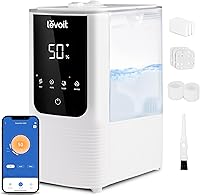
The warm setting on the Levoit model below gives you a way to choose warm or cool mist. Its warm mist is not the same as an air purifier that cools a room; an air purifier's effect on room temperature is a separate question.
For a device-specific setup example, see how to use a Vicks warm mist humidifier. Follow the manual for whichever unit you own, since controls and care steps vary.
What upkeep does each type need?
Both types need regular emptying and cleaning, while humidifiers that use a wick or filter may also need part replacement. The exact schedule and cleaning method depend on the model.
Standing water can collect minerals and residue. Empty unused water, clean the tank and base as directed, then let parts dry before storing the unit.
Ultrasonic models don't necessarily need a traditional air filter, though some include a sponge or other water filter. If you're deciding between filtered and filter-free designs, read humidifier with filter vs no filter.
Warm mist units also need cleaning to remove mineral buildup from heated water. Unplug the unit and let it cool fully before cleaning, following the manual's instructions.
Where should you place a humidifier or vaporizer?
Place either unit on a level, stable surface where mist cannot soak a wall, bed, electronics or floor. Keep warm mist devices away from children and pets because their hot water and steam can burn.
Don't aim output directly at curtains or furniture. If a nearby surface gets damp, move the unit farther away or reduce output.
For overnight use, noise and light may affect placement as much as the mist. Compare options in the quiet humidifiers for bedrooms guide, then follow the chosen unit's clearance instructions.
Which cool mist humidifier should you consider?
Choose a model by mist type, tank handling and the room where it will run. These options are all cool mist or offer a cool mist setting, so they fit readers who want moisture without relying only on steam.
Cool mist humidifier vs vaporizer: which should you choose?
Pick a cool mist humidifier if you want moisture without heated water; pick a vaporizer if warm steam is your priority and you can place it safely. Check the operating method, cleaning needs and room placement before choosing.
A cool mist model makes sense for a bedroom, nursery or shared area where hot water would be a concern. A warm mist model may suit a cool room, provided it stays out of reach and follows its manual.
For most buyers, the deciding rule is simple: choose by output and placement, not by whether the name includes “vaporizer.” The humidifier vs vaporizer guide covers the wider comparison.
Frequently asked questions
Is a cool mist humidifier the same as a vaporizer?
Not always. A cool mist humidifier releases moisture without heating water, often using ultrasonic vibration or a wick.
A vaporizer usually heats water to make steam, though some products use “vaporizer” loosely in their names.
Check the device’s method and whether it produces warm or cool output.
Which is safer around children, cool mist or steam?
A cool mist model avoids the hot water and steam that can cause burns if a warm mist device spills or is touched. Keep any humidifier out of reach, follow its manual, and use stable placement.
Ask a pediatrician about care for a child with ongoing symptoms.
Does a cool mist humidifier need distilled water?
Distilled or purified water can reduce mineral particles from some ultrasonic humidifiers, which may otherwise leave white dust nearby. Check the instructions for your exact model and water type.
Empty, rinse and refill the tank regularly, since water quality does not replace routine cleaning.
Can a cool mist humidifier go on a bedside table?
It can if the surface is stable, level and large enough, and the mist will not land on bedding, electronics or a wall. Follow the manual for clearance and placement.
If the unit leaves moisture on nearby surfaces, move it farther away and lower the output.